By Georgina Sookias, Clinical Facialist
Skin Education · MicroneedlingIs Winter the Best Time for Microneedling?
For most skin, yes. The sun is at its weakest, there is time to complete a full course before summer, and a day or two of redness is easier to plan around. Here is what microneedling does, why winter is the best time to start, how many sessions you need, how to prepare dry winter skin, and when to book around Christmas, ski trips and cold sores.
Winter is one of the best times to start microneedling in the UK. Low UV lowers the risk of pigmentation while skin heals, and a course of three to six sessions, six to eight weeks apart, can be completed by spring so your skin is at its best for summer. The catch is winter dryness: cold air and central heating weaken the skin barrier, so your skin is assessed and prepared first. Book your last session at least one week before a Christmas event, ideally two.
What microneedling does for your skin
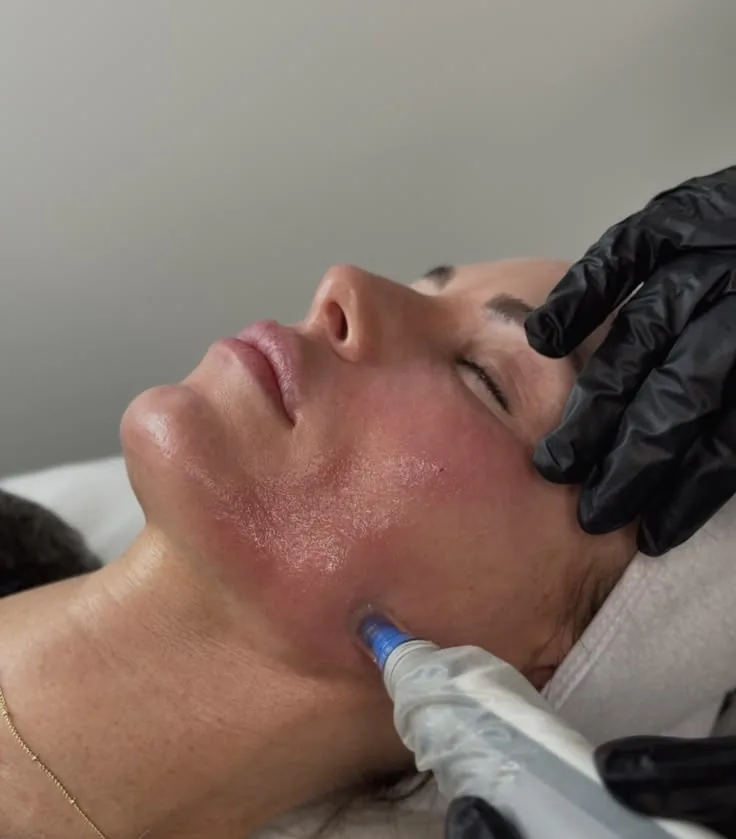
Microneedling, also called collagen induction therapy, uses fine sterile needles to create thousands of tiny, controlled channels in the skin. Your skin treats these as minor injuries and responds by releasing growth factors, which prompt cells called fibroblasts to produce new collagen and elastin. That new collagen is what makes skin smoother, firmer and more even over time.
At my Fulham studio I use Dermapen 4, a medical-grade, FDA-cleared and CE-marked microneedling device, with a new sterile cartridge opened for every client. Tap any benefit to read more.
As new collagen forms, the surface of the skin becomes smoother and more even. Texture is often one of the first things clients notice changing over a course.
Collagen is the scaffolding that keeps skin firm. Rebuilding it gradually softens the look of fine lines, especially around the eyes, forehead and mouth.
Pores cannot be shrunk, but firmer, healthier skin around them can make them look smaller and less noticeable.
Microneedling is widely used for atrophic acne scars, the indented kind. Dermapen 4 has a dedicated scar setting. Scarring usually needs more sessions than texture alone.
Microneedling can help with uneven tone and some types of pigmentation, especially as part of my Advanced protocol with a dark spots pathway. This is exactly why low winter UV matters.
Beyond any single concern, clients describe their skin as plumper, brighter and more resilient as their course progresses.
Microneedling uses your body’s own repair process. Results look natural because they are your own new collagen, not something added.
Microneedling can also treat stretch marks and body scarring, planned individually. See body microneedling.
“I had a wonderful experience with Georgina, who carried out my microneedling and customised chemical peel. From start to finish, she was absolutely fantastic!”
“What I particularly appreciated was how knowledgeable and attentive she was in tailoring the treatments specifically to my darker skin type. She clearly understands the importance of choosing the right techniques and products for different skin tones, which made me feel comfortable and confident that my skin was in safe hands.”
“I was especially impressed by her attention to detail and the care she takes to personalise each treatment rather than adopting a one-size-fits-all approach.”
Skin types IV to VI on the Fitzpatrick scale are more prone to dark marks after treatment, so the right technique, products and timing matter even more. Low winter UV is one more way to stack the odds in your skin’s favour.
Why winter is the best time of year for microneedling
Microneedling creates tiny, controlled channels in the skin, which prompts it to repair itself and build new collagen. For a few days afterwards the skin is healing, and that is when it is most vulnerable to the sun. Winter makes that window much easier to protect.
Tap any card to read more.
After microneedling, sun on healing skin is the main cause of dark marks, known as post-inflammatory hyperpigmentation. In a UK winter the UV index usually sits at 1 or 2, which the Met Office classes as low. That makes the weeks after each session far easier to protect.
Most skin needs three to six sessions, spaced six to eight weeks apart. Starting between November and January gives you time to complete your course by spring, with your skin still improving into summer.
Redness for a day or two is common after microneedling. Winter plans tend to be cosier and more indoors, so most clients find it easier to fit a session in without having to hide from the sun or cancel plans.
Late autumn is when many clients notice what summer left behind: dullness, uneven tone and rougher texture. My Advanced Dermapen 4 treatment includes a dark spots pathway for exactly this, chosen after assessment.
What winter does to your skin barrier
Winter is a good time to have microneedling, but winter skin needs looking after first. Your skin barrier is the outer layer that holds moisture in and keeps irritants out, and the cold months put it under pressure.
What happens
Cold air holds less moisture, and central heating dries indoor air further. Research shows low humidity and low temperatures weaken the skin barrier, and one study found the barrier on the cheek was significantly weaker in winter than in summer.
What you notice
Tightness after cleansing, flaky patches, more sensitivity, makeup that clings to dry areas and a duller look. Facial skin is the most exposed, so it often feels it first.
What I do about it
I assess your barrier before any treatment. If it needs support first, we prepare it. In Signature, hyaluronic acid is applied during microneedling, and your aftercare is built around calm, hydrated skin.
Six simple ways to prepare winter skin
Microneedling and dry winter skin
Dry skin is one of the most common reasons people put off microneedling in winter. Here is what is true, and what is not.
RealityDryness on its own is rarely a reason to say no. A barrier that is raw, cracked, stinging or flaring is different. That is why I assess your skin first, and sometimes suggest a short preparation period before we start.
RealityYour skin may feel tight, and can flake lightly, in the days after a session while it heals. That is temporary, not a long-term drying effect. Gentle hydration and leaving the flakes alone is all it needs.
RealityYou will read this a lot. I could not find good evidence for it. The real winter advantage is less sun on healing skin, not faster healing.
RealityNot after microneedling. UV is lower, not zero, and snow reflects most of it straight back at you. A broad-spectrum SPF every morning stays part of your aftercare all year.
RealityA single session can leave skin looking fresher once the redness settles. The deeper change in texture and fine lines comes from collagen built over a course, and it keeps developing for months.
Start microneedling in winter, be summer ready
Collagen is not built overnight. It forms and matures over weeks and months, which is why microneedling is done as a course rather than a one-off.
Why six weeks minimum? New collagen needs time to form after each session. Treating again too soon does not speed things up. Why eight weeks maximum? Keeping sessions close enough together means each one builds on the collagen laid down by the last.
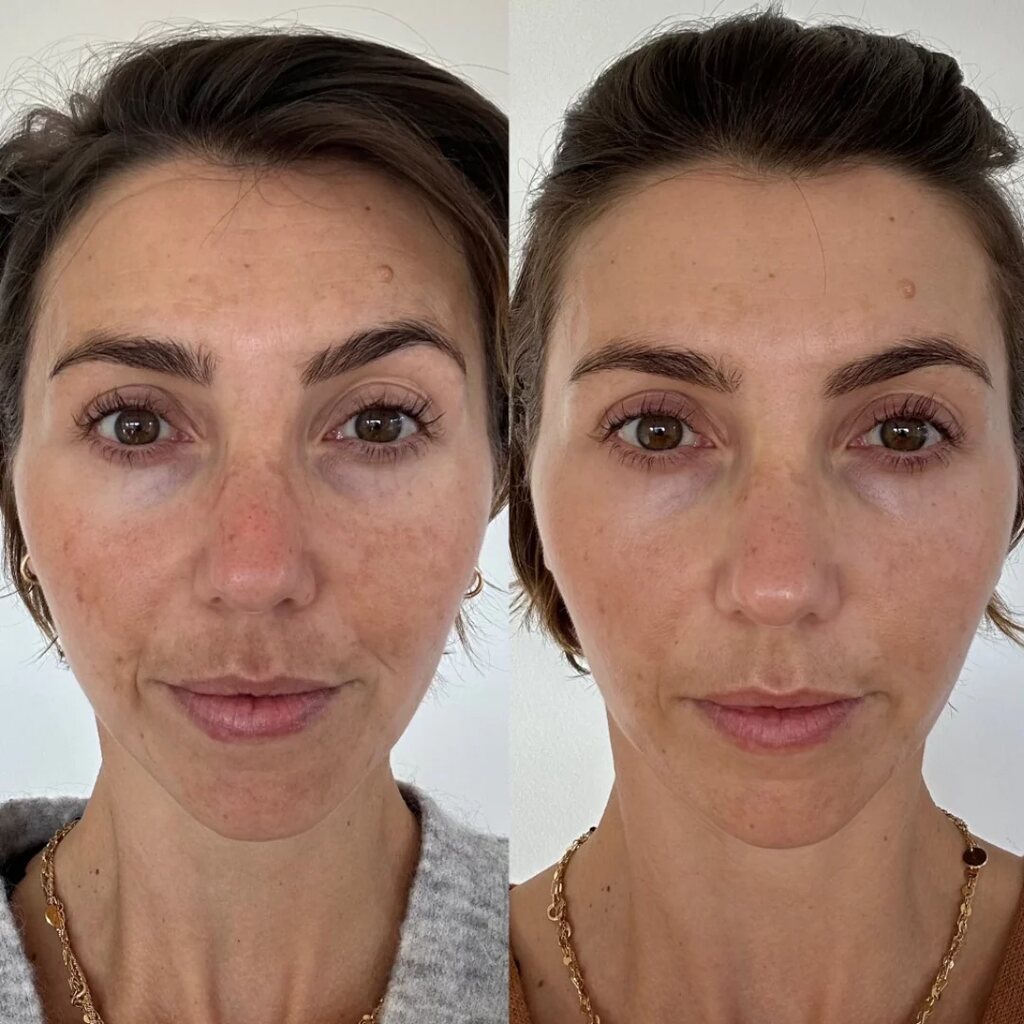
Fine lines and texture often respond to three sessions. Acne scarring and pigmentation may need up to six. The full benefit can take three to six months after your final session to show, so starting in winter means your skin is at its best by summer. Pick a start month to see how three sessions fall.
When would you like to start?
A guide only, based on three sessions six to eight weeks apart. Exact spacing depends on how your skin responds, and I plan it with you.
Which winter treatment is right for you?
Both microneedling treatments use Dermapen 4 and work on the skin itself, building results over a course. The Dermaplaning Glow Facial works on the surface for an instant glow. Where it suits your skin, I can also dermaplane before microneedling.
Signature Dermapen 4 Microneedling
From £250 · face · course of three from £675
A lovely winter choice if your skin feels dull and rough and you want it smoother and more even by spring.
Explore Signature Dermapen 4 MicroneedlingAdvanced Dermapen 4 Microneedling
From £399 · face · course of three from £1,100
Choose this if summer left uneven tone behind, or you want a fully tailored protocol around one concern.
Explore Advanced Dermapen 4 MicroneedlingDermaplaning Glow Facial
From £175 · 45 minutes
If your party is less than a week away, this is the one to book instead of microneedling.
Explore Dermaplaning Glow FacialNot sure which fits? That is exactly what a Personalised Skin Consultation is for. Full prices are on my microneedling cost page.
How long before Christmas should you have microneedling?
Leave at least one week between your last microneedling session and the event, and two weeks if you can. That gives redness time to settle and any light flaking time to pass, so your skin looks its best on the night.
Two weeks before or more
The best time for a session before an event. Redness has long settled, any light flaking has passed and your skin has had time to look its freshest.
One week before
Still fine for most skin. Leave at least a week between your last microneedling session and the event itself.
Less than a week before
I would rather not microneedle this close. A Dermaplaning Glow Facial gives you smoothness and glow with no usual downtime.
Starting a course now? With sessions six to eight weeks apart, plan your first session so that one falls at least a week before your biggest event.
Ski trips, winter sun and cold sores
A few winter situations need planning around. Tap each one.
Snow reflects around 85% of the sun’s UV back up at your face, according to the Met Office. Healing skin and a bright mountain are a poor mix. Tell me your dates and I will plan your sessions around them.
Strong sun soon after microneedling is the main pigmentation risk. Avoid booking a session in the week or two before you fly, and pack a high-factor SPF.
Colds and flu can trigger cold sores, so they often appear in winter. I will not microneedle over an active cold sore. If you get them often, mention it at your consultation and speak to your GP or pharmacist about whether preventative treatment is right for you.
If you are unwell or have a temperature, message me and we will move your appointment. Your skin heals best when the rest of you is well.
Winter aftercare
You will leave with written aftercare tailored to your treatment.
When microneedling is not right for you yet
Microneedling suits most skin types, but there are times to postpone or assess first. Suitability is always confirmed at your consultation.
Frequently asked questions
For most people, yes. UV is at its lowest in a UK winter, which lowers the risk of pigmentation while your skin heals, and there is time to finish a course before spring. The one thing to plan for is winter dryness, which is why I assess your skin barrier first.
Yes, with strict sun protection and by avoiding strong sun in the weeks after each session. Winter simply makes that easier.
At least one week before, and ideally two weeks if you can. If your event is less than a week away, a Dermaplaning Glow Facial is the better choice.
Often, yes. Dryness alone is rarely a reason not to treat. If your barrier is raw, cracked or flaring, I may suggest a short preparation period first. That is decided at your consultation.
Yes. Tightness and light flaking in the days after a session are common while your skin heals, and usually settle within a few days. Keep your routine gentle and hydrating, and leave the flakes alone.
Not over an active cold sore. We will move your appointment until it has healed. If you get cold sores often, tell me at your consultation and speak to your GP or pharmacist about preventative treatment.
If you feel unwell or have a temperature, yes. Message me and we will find a new time.
Avoid booking a session in the week or two before a ski trip or winter sun holiday. Snow reflects most of the sun’s UV, and healing skin is more prone to pigmentation. Tell me your travel dates and I will plan around them.
Yes, every morning. UV in winter is lower, not zero, and protecting healing skin is the single most important part of your aftercare.
Most skin needs between three and six sessions. The exact number depends on your skin and your goal: fine lines and texture often respond to three, while acne scarring or pigmentation may need more. I will tell you at your consultation.
Every six to eight weeks during a course. Six weeks is the minimum, because new collagen needs that time to form between sessions. Eight weeks is the maximum, so each session builds on the last.
Between October and January is ideal. With sessions six to eight weeks apart, that leaves time to complete three to six sessions by spring, and collagen keeps building for months after your final session.
Skin often looks fresher within a week or two of a session. The deeper changes in texture, fine lines and scarring build gradually over your course, and keep developing for around three to six months after your final session.
Microneedling stimulates your skin to build new collagen and elastin. That can improve texture, fine lines, enlarged-looking pores, acne scarring, uneven tone and overall skin quality, with results that build over a course.
You will feel it, but numbing cream is standard practice before treatment. Once it has taken effect, most people describe a scratching, pressure or vibrating feeling rather than sharp pain. Thinner-skinned areas and areas closer to bone tend to feel more noticeable.
Pink to red, a bit like mild sunburn, for a day or two. Some tightness and light flaking can follow for a few days as your skin heals.
Not over an active flare or broken skin. Eczema elsewhere, or well controlled, may be fine. I assess this at your consultation.
At my Fulham studio, Signature Dermapen 4 Microneedling is from £250 for the face, with a course of three from £675. Advanced Dermapen 4 Microneedling is from £399, with a course of three from £1,100.
It can help, by giving Dermapen 4 a smooth, clean surface to work on. Whether it is right for you is decided on the day, based on your skin.

- Met Office. Definition of codes: UV index. Read
- Met Office. What is UV radiation and how does it affect your health? (winter sun and snow) Read
- Engebretsen KA, et al. The effect of environmental humidity and temperature on skin barrier function and dermatitis. J Eur Acad Dermatol Venereol, 2016. Read
- Seasonal changes in skin barrier function of the cheek and forearm. Experimental Dermatology (Karger). Read
- Changes in skin condition in a dry indoor environment in winter. Skin Research and Technology, 2023. Read
- Dermatology Times. Combining microneedling and tranexamic acid for melasma: efficacy and satisfaction (PIH risk and season). Read
- Medanta. Microneedling: how it works, benefits and what to expect (collagen timeline). Read
- Patient.info. Can cold weather trigger cold sores? (Dr Anjali Mahto, British Skin Foundation) Read