Microneedling for Anti-Ageing
What microneedling really does under the skin
Microneedling, or collagen induction therapy, uses fine needles to create controlled micro-injuries that prompt your skin to repair and rebuild its own collagen. Over a course it can improve fine lines, texture, enlarged-looking pores, acne scarring and some pigmentation, improving the quality of your own skin rather than changing your face.
Not sure which treatment is right for your skin?
Book a Personalised Skin Consultation
By Georgina Sookias, Advanced FacialistUpdated September 2026


I provide professional microneedling at my Fulham clinic. Before every treatment I assess your skin, concerns and suitability, then select the treatment settings and suitable topical formulation to match.
In this guide
Why does our skin age in the first place?
Young skin is supported by a dense, organised network of collagen and elastin, maintained by cells called fibroblasts. With age and cumulative sun exposure, that system becomes less efficient: collagen fragments, fibroblast activity slows and UV exposure drives enzymes that break the framework down further.
The result is not simply dryness. It is a gradual structural change, so skin can look thinner, less firm, more lined and rougher in texture.
This matters because a moisturiser can hydrate the surface beautifully, but hydration alone cannot rebuild an altered dermal framework. For that we need to work deeper, which is where collagen-induction treatments become interesting.
Temporarily improves water content and plumpness. Excellent skincare has a genuine role in comfort and appearance.
Targets biological processes involved in collagen and extracellular-matrix repair. This is where collagen-induction treatments become interesting for ageing skin.
What exactly is Microneedling?
Microneedling uses very fine sterile needles to create thousands of controlled microscopic channels in the skin. It is sometimes called collagen induction therapy or percutaneous collagen induction.
The important word is controlled. The treatment creates a carefully judged injury that the body recognises and responds to through its normal wound-repair pathways, which is very different from simply applying another serum to the surface. The treatment asks the skin to repair, and that repair involves the exact cells and structures we want to support in ageing or scarred skin.
A glimpse of microneedling in practice
Controlled, precise and carried out with sterile single-use cartridges. This short clip shows the treatment in progress in my Fulham studio, so you know exactly what to expect.
Every treatment is preceded by a full skin assessment, with the needle depth and formulation selected to match your concern.
Watch a Dermapen 4 treatment
Watch: read the transcript
Microneedling, or collagen induction therapy, works with your skin's own biology. Fine, sterile needles create precise micro channels into the upper dermis. Your skin then releases growth factors, and fibroblasts begin producing new collagen and elastin. But collagen isn't built overnight. It matures and reorganises over weeks to months. Spacing sessions weeks apart lets each treatment build on the collagen laid down by the last. This is why we recommend treating in a course.
What happens under the skin during Microneedling?
This is my favourite part of the treatment because once you understand the biology, it makes much more sense why Microneedling is used for so many different skin concerns.
Controlled micro-injury
The microscopic needle channels create a controlled injury signal. The body recognises that repair is required and initiates its wound-healing response.
Signalling and inflammation
Platelets, inflammatory cells and surrounding tissue release signalling molecules and growth factors. This early inflammatory phase is necessary. Inflammation is not automatically a bad thing. In this setting it is a controlled part of tissue repair.
Fibroblast activity and new matrix
Fibroblasts become active and participate in the production of new extracellular-matrix components, including collagen. Research into Microneedling describes involvement of signalling pathways and growth factors associated with wound repair, angiogenesis and tissue regeneration.
Remodelling and maturation
The visible redness disappears long before the biological process is finished. Collagen continues to remodel and mature over the following weeks and months, which is why Microneedling results are progressive rather than instant.
What happens beneath the skin at different depths
Select a depth to see roughly which layer is affected. This is educational, not an at-home depth guide.
Approximate reach: the upper (papillary) dermis, where many fibroblasts sit. A professional might consider this depth for: Fine lines, general skin quality and early textural change. The fine needles create temporary microchannels; as the skin repairs them it lays down new collagen and elastin.
All depths at a glance
- 0.5 mm: reaches the epidermis and the very top of the dermis. Superficial goals such as overall skin freshness, mild texture and product-supported skin quality.
- 1.0 mm: reaches the upper (papillary) dermis, where many fibroblasts sit. Fine lines, general skin quality and early textural change.
- 1.5 mm: reaches deeper into the dermis. More established textural concerns or certain acne scarring, balanced against the individual and the area.
- 2.0 mm: reaches a deeper dermal setting. Specific concerns such as some acne scarring on thicker skin. Not appropriate for every area or person.
Topical versus professional application: applying a product to intact skin is not the same as applying a suitable professional formulation during microneedling. The stratum corneum limits passive topical penetration, and microneedling creates temporary pathways through that barrier. Even so, the needle depth and the depth a solution actually reaches are not the same, and a serum does not automatically travel as deeply as the needle. How far a professionally selected solution travels depends on molecular size, formulation, charge, stability, the vehicle and the condition of the skin barrier, not molecular size alone. Skin thickness varies across the face and body, deeper is not automatically better, and a 2.0 mm setting is not appropriate for every area or every person, so depth must be selected professionally.
Sources: Bos & Meinardi, the 500 Dalton rule for skin penetration (Exp Dermatol, 2000); Yousef et al., Anatomy, Skin (Integument), Epidermis (StatPearls); U.S. FDA, Microneedling Devices.
Collagen is the headline, but it is not the whole story
Microneedling is usually marketed as a collagen treatment, but the repair response is broader than one protein, involving fibroblast activity, elastic fibres, extracellular-matrix organisation and growth-factor signalling. Histological research has demonstrated increased newly synthesised collagen after repeated treatments.
This is why I prefer to describe Microneedling as a skin-remodelling treatment rather than simply a glow facial. The glow is lovely; the biology underneath it is the interesting part.
Why is Microneedling so good for anti-ageing?
Aesthetic treatments do not all do the same job. Botulinum toxin relaxes muscle movement, filler replaces volume and HIFU targets deeper structural tissue. Microneedling occupies a different space: its central mechanism is to trigger controlled repair and dermal remodelling in the skin itself.
That makes it one of my favourite treatments for clients who are not trying to change their face, but want their own skin to look healthier, smoother, firmer and more resilient, whether the concern is fine lines, dullness, texture or long-standing acne scarring.
A 2025 systematic review of 21 studies and 723 patients found wrinkles were the most commonly evaluated outcome, followed by texture, photoageing and laxity, with pooled patient satisfaction of 83%.
One of my favourite evidence-backed treatments for long-term skin quality, and one of the most logical treatments when collagen remodelling is the goal.
The two microneedling treatments I offer
Before we go deeper into individual concerns, here are the two microneedling routes available at my Fulham clinic. You do not need to decide between them yourself; this is simply so you can see what is actually offered.
Professional Dermapen 4 microneedling focused on controlled collagen remodelling and skin-quality concerns.
Explore Dermapen 4 MicroneedlingA multi-stage treatment: a concern-specific SkinOx peel where suitable, Dermapen 4 microneedling with the selected Exosome or PDRN formulation used during the microneedling stage, a SkinOx serum, matched Fotoage light and finishing care.
Explore Advanced MicroneedlingNot sure which one is right for you? You do not need to choose your own protocol. The right route depends on your skin, concern, goals and an assessment, and is confirmed at consultation.
The main benefits of Microneedling
Choose a concern to see how the same core mechanism, controlled repair and remodelling, applies. The photography here is illustrative editorial imagery, not client results.
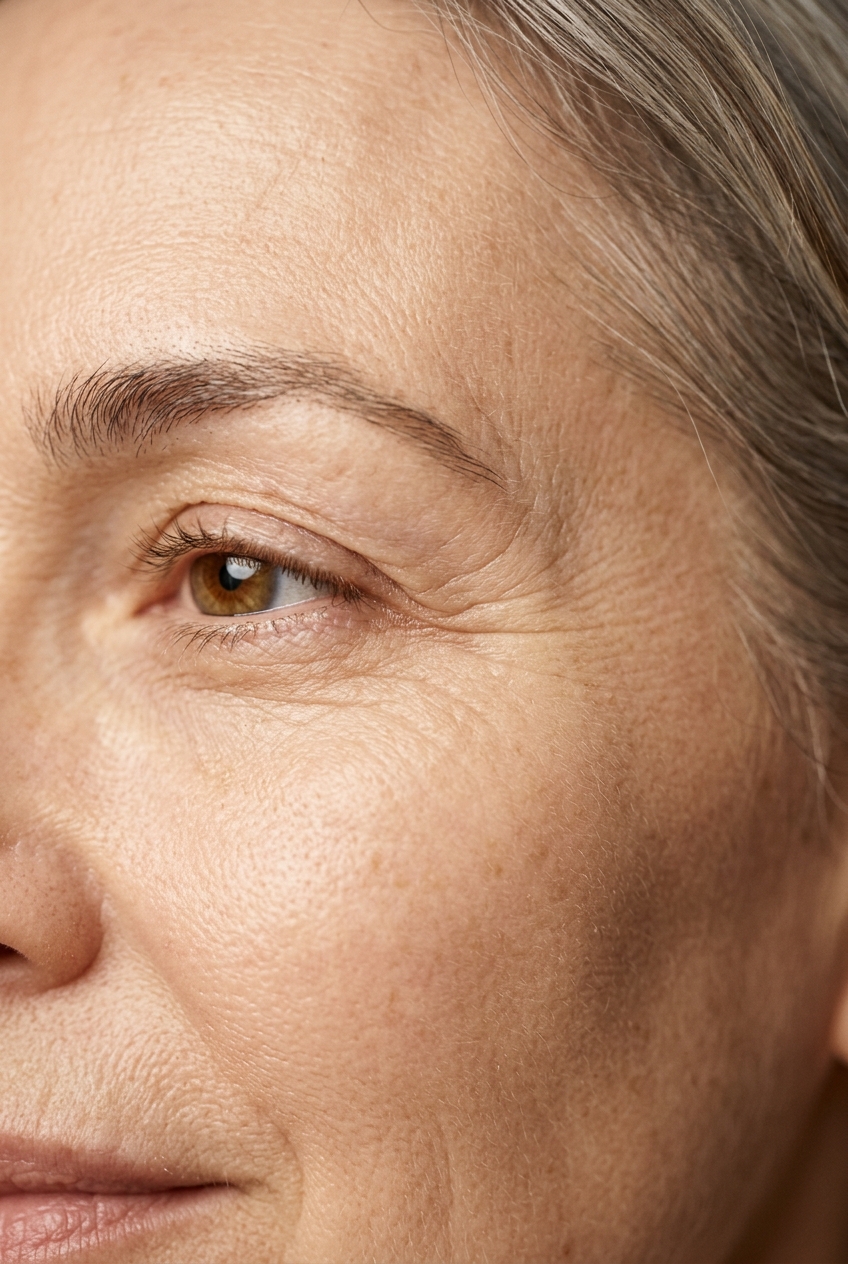
Fine lines & ageing
Fine lines are partly associated with structural changes in the dermis, including collagen organisation and quantity. Collagen-induction therapy targets the skin itself rather than freezing movement or replacing volume, so over a course the skin can look smoother and more resilient.
Texture & pores
You cannot permanently close a pore, but as the quality and support of the surrounding skin improves the surface can appear smoother and follicular openings less visually obvious, giving a more refined, polished texture.
Pigmentation & tone
Microneedling has been investigated alone and alongside selected topical agents such as tranexamic acid for uneven tone and melasma. It is considered as part of a broader pigmentation plan, never a standalone cure.
Dull, uneven quality
Accelerated turnover during recovery often leaves the skin looking fresher and brighter, while dermal remodelling supports firmer, healthier overall skin quality rather than changing the face.
Microneedling can also support
Microneedling for fine lines and wrinkles
Fine lines and wrinkles are partly associated with structural changes in the dermis, including changes in collagen organisation and quantity. That makes them a logical target for collagen-induction therapy.
Microneedling does not freeze facial expression and it does not replace lost facial volume. Instead, the aim is to improve the skin itself. Over a course of treatments, clients may notice that the skin looks smoother, more refined and more resilient as remodelling progresses.
This distinction matters. If a line is predominantly caused by strong muscle movement, botulinum toxin may be the more appropriate treatment. If the concern is loss of volume, filler may sometimes be more relevant. If the concern is the quality and texture of ageing skin itself, Microneedling becomes extremely interesting.
Microneedling for acne scars
Microneedling has one of its strongest established uses in the treatment of atrophic acne scarring. Acne can destroy or disrupt collagen in the dermis. Once the inflammation has resolved, the resulting loss of support can leave the skin indented. Microneedling stimulates a new repair response within that tissue.
However, not every acne scar behaves the same way. Explore the main types below.
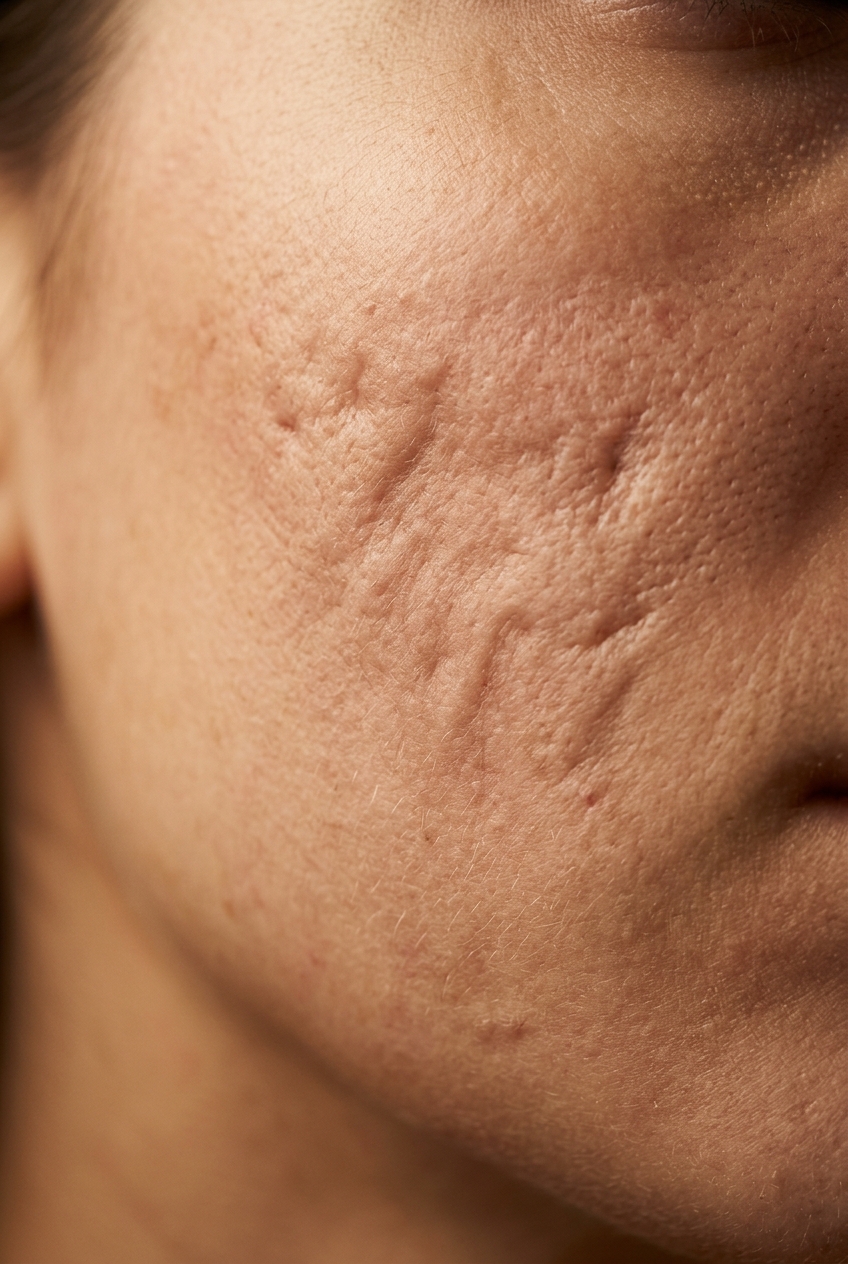
Explore the scar types
Rolling scars
Broad, shallow undulations caused by collagen loss and sometimes deeper tethering. Often suitable for Microneedling. Tethered scars may also need subcision.
Boxcar scars
Wider depressions with relatively defined edges. Shallow boxcar scars may respond. Deeper scars may require combination treatment.
Ice-pick scars
Deep, narrow pits. Standard Microneedling is generally not the best standalone treatment. Scar-specific procedures such as TCA CROSS may be considered by appropriately qualified practitioners.
The American Academy of Dermatology states that a commonly used acne-scar protocol may involve around 3 to 5 Microneedling treatments every 2 to 4 weeks, with studies reporting approximately 50% to 70% improvement in acne scars.
Microneedling does not treat active inflammatory acne. Active infection or inflammatory acne should be assessed and treatment postponed where appropriate.

The appearance of acne scarring and skin texture around the chin and jaw before and after a course of professional microneedling.
Individual result. Results vary from person to person and are not guaranteed.Microneedling for large-looking pores and uneven texture
You cannot permanently close a pore because pores are part of normal skin anatomy. What we can sometimes improve is how prominent they look.
As the quality and support of the surrounding skin improves, the surface can appear smoother and follicular openings may become less visually obvious. This is why clients often describe a more refined or polished skin texture after a course. Microneedling can reduce the appearance of enlarged pores.
Microneedling for pigmentation and melasma
Pigmentation needs a more individualised approach. Microneedling has been investigated both alone and alongside selected topical agents such as tranexamic acid, and systematic reviews have found improved melasma severity with the combination, though it is not consistently superior to every established melasma treatment.
That is why I never describe it as a melasma cure. Melasma is chronic and usually needs rigorous sun protection, trigger management and realistic expectations about recurrence. For the right client, tranexamic-acid Microneedling can form part of that plan.

The appearance of uneven pigmentation and overall skin tone before and after a course of professional microneedling.
Individual result. Results vary from person to person and are not guaranteed.Is Microneedling suitable for darker skin tones?
Because standard Microneedling is mechanical rather than dependent on significant thermal injury, it can be an attractive option across a wide range of skin tones, and the American Academy of Dermatology describes it as suitable for people of different skin colours.
Suitable does not mean risk-free. Post-inflammatory hyperpigmentation can still occur, particularly with over-aggressive treatment, recent sun exposure, poor aftercare or an individual predisposition, so correct assessment, technique, preparation and aftercare remain essential.
Light therapy, LED and the Fotoage stage
My Advanced Microneedling with Exosomes or PDRN includes a concern-matched Fotoage light stage, and standalone medical-grade LED photobiomodulation is also available. I use LED immediately after microneedling to support the recovery environment rather than stressing freshly treated skin.
Red and near-infrared photobiomodulation is studied for its effects on cellular metabolism, inflammatory signalling and tissue repair. It has evidence for supporting the biological pathways involved in inflammation and recovery, which is why I include it in my post-treatment protocol.
Medical-grade LED photobiomodulation
Selected red and near-infrared wavelengths are studied for supporting the biological pathways involved in skin recovery. My Advanced Microneedling with Exosomes or PDRN includes a concern-matched Fotoage light stage, and standalone medical-grade Red Light Therapy is also available.
630 nm660 nm810 nm830 nm850 nm
Learn more about Red Light TherapyHow many Microneedling sessions do you need?
Meaningful remodelling is generally approached as a course rather than a one-off. For general rejuvenation a sensible starting point is around 3 sessions; concerns such as acne scarring may need more, with the American Academy of Dermatology describing protocols of roughly 3 to 5 sessions at 2 to 4 week intervals.
This is guidance, not a compulsory package. I do not prescribe a fixed course as standard: the number and spacing depend on your skin, concern, response and goals. For more detail see my guide on microneedling sessions, pain and downtime.
General rejuvenation
Often start with approximately 3 sessions.
Acne scarring
Often approximately 3 to 5 or more, depending on scar type and severity.
Pigmentation
Individualised as part of a broader pigment plan.
Maintenance
Individual rather than a mandatory fixed schedule.
When will I see Microneedling results?
Initial response settles
Redness and temporary sensitivity may occur as the initial response settles.
Skin looks fresher
Skin often begins looking fresher as recovery progresses.
Early texture changes
Early texture and skin-quality changes may become more noticeable.
Remodelling continues
Collagen remodelling continues. The biological reason for choosing Microneedling is the remodelling process, and that takes time.
This is why I tell clients not to judge Microneedling solely by the first week. The early glow is not the same thing as the final result. The biological reason for choosing Microneedling is the remodelling process, and that takes time.
The early glow is not the same thing as the final collagen-remodelling result.
The American Academy of Dermatology notes that some improvement may appear within weeks while full results can take several months as collagen production develops.
What Microneedling can and cannot do
The best treatment is the one whose mechanism matches the problem.
Who should not have Microneedling?
Microneedling is not suitable for everyone and treatment is always subject to consultation. It may need to be postponed or avoided in a number of situations.
See the full list of contraindications
Microneedling does not treat keloids, and FDA guidance identifies keloid scars and a history of keloids among circumstances where it may not be appropriate. This is exactly why consultation and correct client selection matter.
Microneedling vs HIFU: which do you need?
These are not competing treatments. Skin with good structure but rough texture, pores or scarring often suits Microneedling; significant lower-face laxity often suits HIFU. Some clients benefit from both, appropriately timed.
Why Microneedling has become one of my favourite skin treatments
“I like treatments where the science behind the result makes sense.”
Microneedling is not trying to change the shape of your face. It is essentially asking your skin to repair and remodel itself, which makes it particularly useful for clients who want healthier skin, better texture and fewer visible lines rather than dramatic change.
I also like that I can make the treatment specific to the client. Someone coming to me for dehydration does not need the same protocol as someone with melasma or advanced skin ageing.
The biggest mistake in aesthetics is treating the treatment name as more important than the person in front of you. I always start with the skin and the concern, then decide which treatment makes sense.
Frequently asked questions
What does Microneedling actually do to your skin?
Microneedling creates controlled microscopic injuries that trigger the skin’s natural repair response. This activates fibroblasts, collagen production and extracellular-matrix remodelling, and over time can improve fine lines, texture, acne scarring and overall skin quality.
Is Microneedling good for anti-ageing, and does it build collagen?
Yes. Microneedling is also known as collagen induction therapy because controlled micro-injury activates wound-repair pathways involving fibroblasts and new collagen. Histological research has shown increased newly synthesised collagen after repeated treatments, which is why it is a well-supported option for fine lines, texture and early loss of firmness. It does not replace treatments for significant volume loss or deeper structural sagging.
How many sessions will I need, and when will I see results?
For general rejuvenation a sensible starting point is around three sessions, while acne scarring may need roughly three to five at two to four week intervals. Early improvements can appear within a few weeks, but collagen remodelling is gradual and continues developing for several months. I do not prescribe a fixed course as standard.
Is Microneedling good for acne scars?
Microneedling can be particularly useful for atrophic acne scars, including many rolling and shallow boxcar scars. Deep tethered scars may also need subcision, while deep ice-pick scars often require a scar-specific procedure such as TCA CROSS. Active inflammatory acne should be assessed before Microneedling.
Does Microneedling help pores, texture and pigmentation?
It cannot permanently close pores, but improving the surrounding skin can make them look less obvious and the surface smoother. For pigmentation it has been studied alone and alongside agents such as tranexamic acid, and can help appropriately selected clients as part of a broader plan that includes rigorous sun protection.
Is Microneedling suitable for darker skin?
Microneedling can be used across a wide range of skin tones because standard Microneedling does not rely on significant thermal injury. However, post-inflammatory pigmentation is still possible, so correct technique, skin preparation, sun protection and aftercare remain important.
Is Microneedling with Exosomes better?
Exosome-assisted microneedling is an emerging area of regenerative aesthetics. Most published exosome research uses human stem-cell-derived exosomes, which are different from the plant-derived Exo Ox formulation I use, so that research does not establish results for my treatment. I therefore offer the advanced treatment as a premium, promising option, not one proven to be superior to standard microneedling, and the right route for you is decided at assessment.
Is microneedling or laser better?
Neither is universally better; they use different mechanisms. Standard microneedling creates controlled mechanical micro-injury without intentionally using thermal energy, while lasers use light energy that can be thermal or ablative. Laser can be excellent for certain pigmentation and resurfacing concerns, whereas microneedling suits gradual collagen remodelling with relatively manageable downtime. The right choice depends on your skin and concern.
Can I use my normal serum with a home dermaroller?
Ordinary skincare should not automatically be treated as suitable for delivery through freshly created skin channels, and home devices raise real concerns around sterility, technique and inappropriate products. Professional Microneedling uses controlled protocols, sterile single-use cartridges and a skin assessment rather than simply needling everyday skincare into the skin.
- Collagen
- A major structural protein that gives skin strength and support.
- Elastin
- A protein involved in the skin’s ability to stretch and return towards its original shape.
- Fibroblast
- A cell in connective tissue responsible for producing collagen and other extracellular-matrix components.
- Extracellular matrix
- The structural network surrounding cells that helps give skin strength, organisation and support.
- Collagen induction therapy
- Another term commonly used for Microneedling.
- TGF-beta
- A family of signalling molecules involved in tissue repair and remodelling.
- Angiogenesis
- The formation of new blood vessels.
- Stratum corneum
- The outermost layer of the epidermis and a major component of the skin barrier.
- PIH
- Post-inflammatory hyperpigmentation, where excess pigment appears following skin inflammation or injury.
- Photobiomodulation
- The use of selected red and near-infrared light wavelengths to influence cellular biological processes without intentionally creating thermal injury.
- Melasma
- A chronic pigmentation condition typically causing symmetrical patches of facial hyperpigmentation.
- Atrophic acne scar
- A depressed scar resulting from loss of dermal tissue following acne.
Clinical evidence and further reading
- FDA. Microneedling Devices.
- American Academy of Dermatology. Microneedling can fade scars, uneven skin tone, and more.
- Foppiani JA et al. Microneedling for Facial Rejuvenation: A Systematic Review. Aesthetic Plastic Surgery. 2025. PMID: 40542236.
- Microneedling histological / collagen research. PMID: 26096653.
- Feng X et al. The efficacy and safety of microneedling with topical tranexamic acid for melasma treatment: a systematic review and meta-analysis. PMID: 37584240.
- Combining Microneedling and Tranexamic Acid for Melasma: A Systematic Review and Meta-Analysis. PMID: 40555739.
- Liu C et al. A Double-Blinded, Split-Face Clinical Trial Evaluating the Effects of a Vitamin C, E, and Ferulic Acid Serum Combined with Microneedling on Facial Photoaging. 2026. PMID: 41710525.
- Efficacy of combined treatment with human adipose tissue stem cell-derived exosome-containing solution and microneedling for facial skin aging. PMID: 37377400.
- Granulomatous reaction after Microneedling with topical products. PMID: 24258303.
- Photobiomodulation wound-healing review. PMID: 27943458.
- Modulation of gene expression in skin wound healing by photobiomodulation therapy: systematic review. PMID: 39031566.
- Photobiomodulation and Biological Pathways in Skin Regeneration and Rejuvenation. 2026. PMID: 42392660.
- Bos JD, Meinardi MMHM. The 500 Dalton rule for the skin penetration of chemical compounds and drugs. Experimental Dermatology. 2000. PMID: 10971330.
- Yousef H, Alhajj M, Sharma S. Anatomy, Skin (Integument), Epidermis. StatPearls.
- Alkilani AZ, McCrudden MTC, Donnelly RF. Transdermal Drug Delivery: Innovative Pharmaceutical Developments Based on Disruption of the Barrier Properties of the Stratum Corneum. Pharmaceutics. 2015. PMID: 26506371.
Ready to start Microneedling?
If your goal is healthier-looking skin rather than changing the shape of your face, Microneedling is one of my favourite treatments to consider. The first step is deciding what your skin actually needs.
At my Fulham clinic microneedling is offered as two routes: Dermapen 4 Microneedling and Advanced Microneedling with Exosomes or PDRN, so the treatment can be selected around your concern rather than offering everybody exactly the same protocol. The Advanced treatment includes a concern-matched Fotoage light stage.
My clinic is at South Park Studios, 88 Peterborough Road, Fulham, London SW6 3HH.
Serving clients across Fulham, Parsons Green, Wandsworth Town and South West London.
This article is for informational and educational purposes only. It does not constitute medical advice. Always consult a qualified practitioner before starting any aesthetic treatment.