By Georgina Sookias, Clinical Facialist
Skin Education · DermaplaningDermaplaning Benefits: What It Really Does for Your Skin
Smoother, brighter skin and makeup that sits beautifully, straight away. Dermaplaning is wonderful at what it does. It is not a treatment for scars, lines or acne. Here is exactly what to expect, how a professional treatment differs from an at-home razor, and when I would suggest microneedling instead.
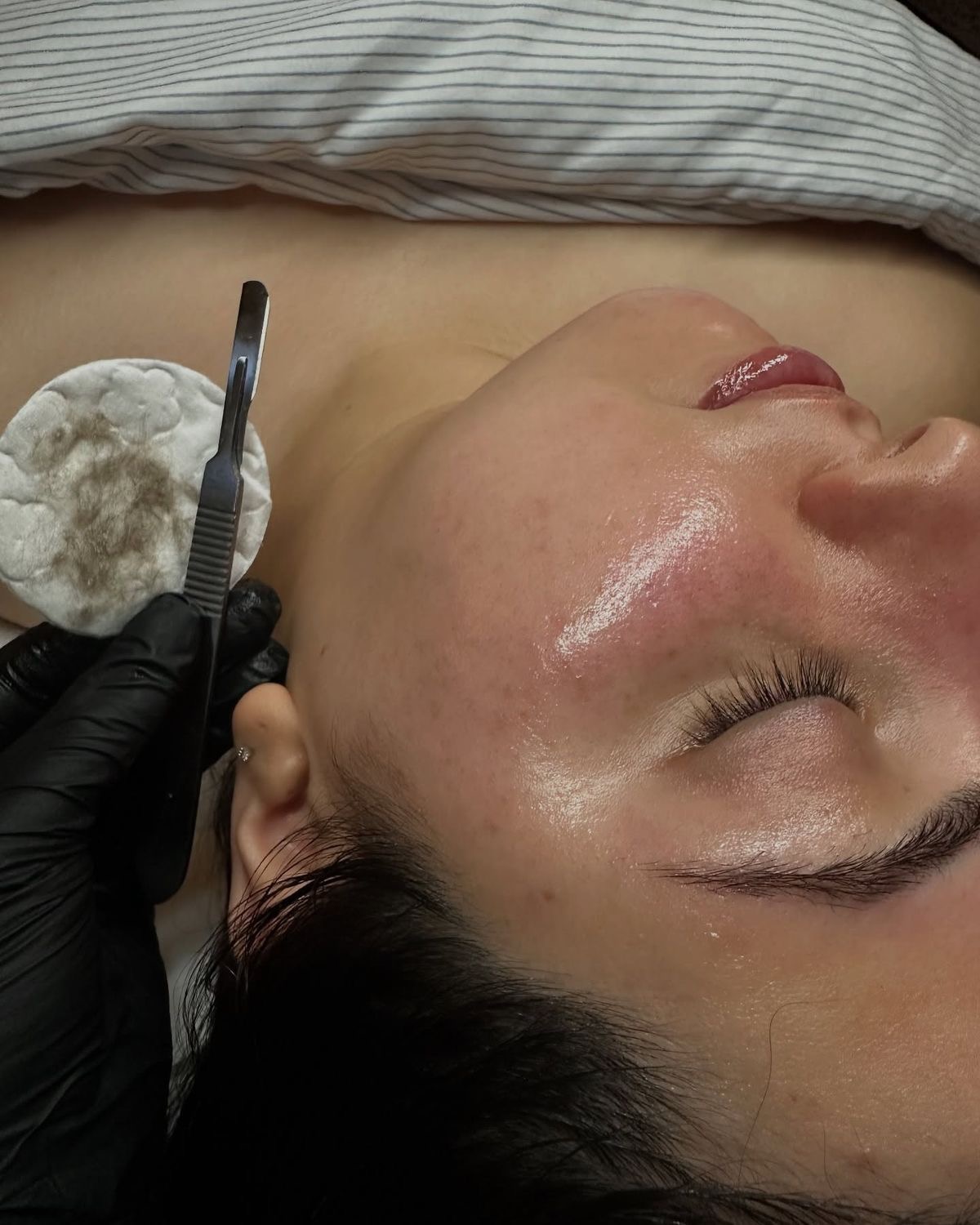
Dermaplaning uses a sterile surgical blade to remove dead skin cells and fine facial hair from the surface of the skin. The proven benefits are smoother, brighter-looking skin and a cleaner base for makeup, seen immediately and lasting around three to four weeks. It does not treat scars, wrinkles or acne. For those, microneedling is the better choice.
What dermaplaning genuinely does for your skin
Dermaplaning removes two things: the outermost layer of dead skin cells, called the stratum corneum, and the fine, soft vellus hair often called peach fuzz. Nothing reaches the deeper layers of the skin, so there is no downtime in the usual sense. Think of it as polishing the surface, not rebuilding what sits beneath it.
Tap any card to read more.
Dead cells build up on the surface and make skin feel rough or uneven. Removing them leaves skin noticeably softer. Clients usually notice it the moment they touch their face.
A layer of dead cells and fine hair scatters light and makes skin look flat. With it gone, you are seeing the newer skin underneath, so it looks fresher and more luminous.
Foundation and powder catch on fine hair and dry patches. On a dermaplaned surface they glide on, sit flatter and look less heavy. It is a big reason clients book before weddings and events.
Laboratory research has shown dermaplaning measurably thins the stratum corneum and increases how readily the skin lets substances through. That helps hydrating serums. It is also why strong actives need care for a few days afterwards.
Vellus hair is removed at the surface and regrows over a few weeks with the same colour, width and speed. Studies going back to the 1920s found shaving changes none of these. Regrowth can feel slightly blunt at first, because the tip is cut rather than tapered.
Because it clears the surface evenly, dermaplaning prepares skin well for a professionally selected peel. That pairing is the heart of my Dermaplaning Glow Facial, where a peel is added only when your skin is right for it on the day.
What dermaplaning can’t do
A lot of what you read online overpromises. You will often see dermaplaning described as a treatment for scars, wrinkles, pigmentation or breakouts. The evidence does not support that, and I would rather you knew before you book.
RealityScars sit deeper than the layer dermaplaning reaches. The surface may feel smoother for a few weeks, but the scar itself does not change. For scarring, Dermapen 4 microneedling is the treatment to discuss.
RealityDermaplaning is not an acne treatment, and it should never be done over active, inflamed spots. For acne-prone skin, microneedling and a considered home routine are the more useful conversation.
RealityThere is no meaningful collagen-building effect. Skin can look fresher, which is lovely, but lines and firmness are a job for microneedling or HIFU.
RealityIt will not. Cutting the hair at the surface does not change the follicle. It regrows exactly as it was.
RealityA guarded razor mostly removes hair. A professional sterile blade removes dead skin cells too, evenly, on skin that has been assessed first. See the comparison below.
Why a professional treatment is a different thing entirely
At-home dermaplaning tools are everywhere, and they are often sold as the same treatment for a fraction of the price. They are not the same. The difference starts with the blade, and it does not end there.
The blade
In clinic, dermaplaning is done with a sterile surgical scalpel blade, commonly a number 10. I use Swann-Morton surgical blades, opened fresh for each client and then disposed of safely. The edge is genuinely sharp, which is exactly why it removes dead cells cleanly in light, controlled strokes.
The technique
Skin is cleansed and completely dry. One hand holds the skin taut while the other works in short, feathering strokes at a controlled angle. I work around anything that should be left alone, such as raised moles, active spots or broken skin, and adjust for thinner areas around the nose and jaw.
The assessment
Before any blade touches your skin, I check whether today is the right day for it. Active breakouts, irritation, sunburn and recent strong actives all change the plan. I also decide whether a peel belongs in your treatment. A razor at home cannot make that call.
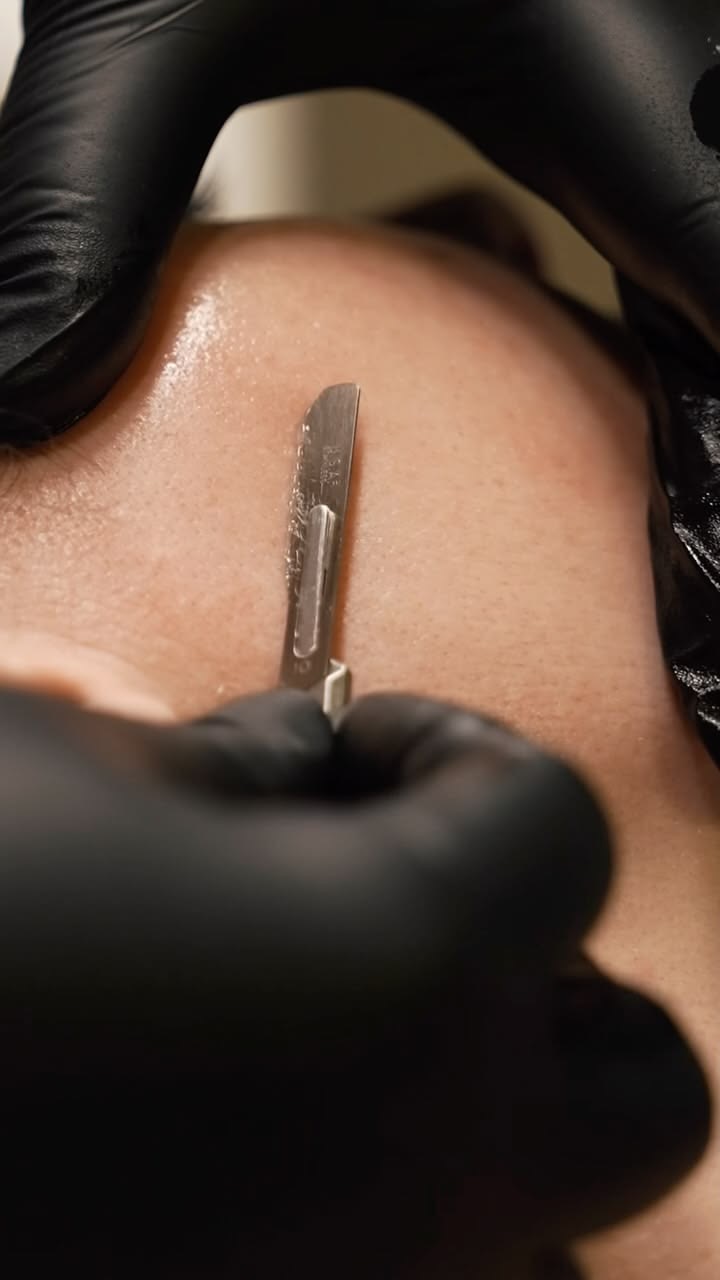
Keep it gentle, and never use a scalpel on yourself
A guarded at-home tool is fine for keeping peach fuzz down between appointments. Use it on clean, completely dry skin. Keep it clean and replace it often.
Never go over spots, broken or irritated skin, and do not use it more than every couple of weeks. If something stings or looks red and angry, stop.
Which treatment is right for what you want?
This is the question I am asked most. The simplest way to see it: dermaplaning works on the surface, microneedling works on the skin itself. Many of my clients have both, at different times, as part of one plan.
Dermaplaning Glow Facial
From £175 · 45 minutes
Choose this if you want your skin to look its best this month.
Explore Dermaplaning Glow FacialSignature Dermapen 4 Microneedling
From £250 · face
Choose this if you want your skin to be different in three months.
Explore Signature Dermapen 4 MicroneedlingAdvanced Dermapen 4 Microneedling
From £399 · face
Choose this for a fully tailored protocol around one main concern.
Explore Advanced Dermapen 4 MicroneedlingNot sure which fits? That is exactly what a Personalised Skin Consultation is for.
Why dermaplaning first can make microneedling work better
Dermaplaning and microneedling are not rivals. Used together, dermaplaning is a useful first step. Where it suits your skin, I can dermaplane before your Signature or Advanced Dermapen 4 treatment.
A smoother path for the pen
With vellus hair removed, Dermapen 4 glides evenly across the skin instead of catching on fine hair.
Needles meet fresh skin
Clearing dead surface cells means the microneedling works on fresh skin, not on a layer of build-up.
A cleaner surface for your formulation
Whatever is applied during microneedling, hyaluronic acid in Signature or your selected formulation in Advanced, goes onto a clean, even surface.
A clearer view of your skin
With the surface clear, I can see texture, pores and scarring more precisely while I work.
It is not automatic. If you have active breakouts in an area, I may leave the dermaplaning out there and still go ahead with microneedling. Your skin on the day decides.
A complete 45-minute facial, not a five-minute scrape
My Dermaplaning Glow Facial is priced from £175 at South Park Studios, Fulham SW6. Tap each stage to see what it involves.
Thorough preparation, so the blade works on completely clean skin.
Skin preparation appropriate to your treatment.
A sterile blade removes dead surface cells and vellus hair in light, controlled strokes.
A professionally selected peel is added only if your skin is right for it on the day.
Products chosen for what your skin needs at that appointment.
Finishing sun protection to close the treatment.
Dermaplaning suits most skin types, but not every day
It works well for sensitive skin and skin that does not tolerate chemical exfoliants. I check for these first. None of them means never. It usually means not today, or a different treatment first.
Results are immediate and usually last around three to four weeks, which is roughly how long your skin takes to renew its surface. Most clients who love it book every four weeks or so. Going more often has no benefit and can over-exfoliate the skin.
Looking after your skin afterwards
Your skin has just been exfoliated, so the next few days are about keeping it calm and protected.
Frequently asked questions
Smoother skin, a brighter and fresher-looking complexion, a cleaner base for makeup, removal of fine vellus hair and a better surface for skincare. The results are immediate and usually last around three to four weeks.
No. Removing the fine vellus hair on your face does not change the follicle, so it grows back with the same colour, thickness and speed. It can feel slightly blunt as it first regrows, because the tip has been cut rather than naturally tapered. That settles.
No. A razor at home mostly removes hair. Professional dermaplaning uses a sterile surgical blade to remove dead skin cells as well as vellus hair, which is why skin looks brighter and feels smoother, not just hair-free.
No. Most clients feel a light scraping or stroking sensation and nothing more.
Dermaplaning is not an acne or scar treatment, and I will not dermaplane over active, inflamed spots. For acne scarring, Dermapen 4 microneedling is usually the more useful conversation.
Smoothness and brightness usually last around three to four weeks, in line with your skin’s natural renewal cycle. Vellus hair regrows over a similar time.
Around every four weeks suits most clients who love it. Going more often has no benefit and can over-exfoliate the skin.
I recommend leaving your skin bare for the rest of the day. Makeup usually goes on beautifully from the next day.
Most clients book a few days before, which leaves time for any pinkness to settle, especially if a peel forms part of the treatment. I will advise the right timing for your skin when you book.
It can help. Removing vellus hair and dead surface cells first lets Dermapen 4 glide evenly and work on fresh, clean skin, with your formulation applied to an even surface. Whether it is right for you is decided on the day, based on your skin.
A guarded at-home tool can keep peach fuzz down, used gently on clean, dry skin and never over spots. It is not the same as a professional treatment, and you should never use a surgical scalpel on yourself.

- Pryor L, Gordon CR, Swanson EW, et al. Dermaplaning, topical oxygen, and photodynamic therapy: a systematic review of the literature. Aesthetic Plastic Surgery, 2011. Read
- Tijani AO, et al. Dermaplaning for transdermal drug permeation enhancement: a qualitative and quantitative assessment. AAPS PharmSciTech, 2023. Read
- Cleveland Clinic. Dermaplaning: what it is, benefits and side effects. Read
- Live Science. Does shaving really cause hair to grow back thicker and coarser? (Trotter, 1928, and a 1970 controlled study) Read