Microneedling: How Many Sessions Do You Need, Does It Hurt & What Is the Downtime?
Three questions come up more than any others before someone books microneedling: how many sessions will I actually need, does it hurt, and how much time do I need to plan for afterwards.

Georgina Sookias
Level 7 qualified medical aesthetics practitioner · Fulham, London
The three questions everyone asks first.
Tap a question to jump straight to the detail.
What microneedling actually looks like.
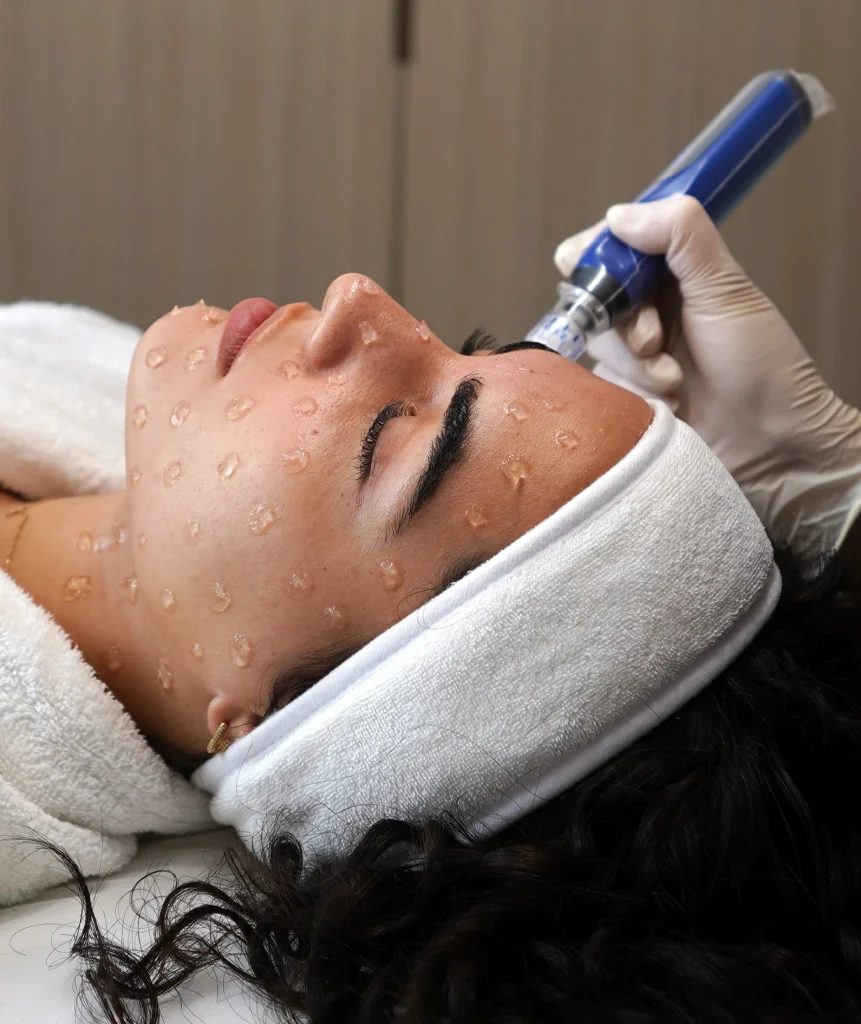
A short clip of a professional microneedling treatment carried out by Georgina at the Fulham studio.
How many microneedling sessions will you need?
There is no single answer here, and any article that gives you one number for every skin concern is not being straight with you. Select what you are treating to see the evidence-based guidance.
Acne scarring
This is the concern with the clearest published guidance. The American Academy of Dermatology describes a commonly used protocol of 3 to 5 treatments, performed every 2 to 4 weeks, with studies showing this approach can improve the appearance of acne scars by roughly 50% to 70%. Scarring is one of the concerns most likely to need a genuine course of treatment rather than one or two sessions.
- 01The specific concern being treated
- 02How your skin responds to the first session or two
- 03The treatment area
- 04Whether you are combining microneedling with a specific formulation
- 05Your practitioner's clinical judgement after assessing your skin directly
Figures above reflect published dermatology guidance, not a fixed clinic protocol. Your plan is confirmed only after your skin is assessed directly.
What does it actually feel like?
Cheeks
fuller, fleshier area, often feels less noticeable
You will feel it, but numbing cream is standard practice before treatment. Once it has taken effect, most people describe the sensation as a scratching, pressure, or vibrating feeling rather than sharp pain. Sensation genuinely does vary by area: thinner-skinned areas and areas closer to bone tend to feel more noticeable than fuller, fleshier areas of the face.
Treatment depth also affects sensation, but deeper does not automatically mean a better result. The correct depth is the one appropriate for the concern and area being treated, not the maximum setting available.
This is also where the device itself matters. I use SkinPen Precision Elite for microneedling treatments, specifically because of the control it gives over depth and consistency during treatment. If you want the full technical detail, I explain the device, depth control, needle system and treatment protocol in my guide to why I chose SkinPen Precision Elite for microneedling.
What microneedling downtime is really like.
A clear, honest, day-by-day picture rather than vague reassurance. Tap a stage to expand it.
Immediately after
Redness is common on lighter skin tones, while darker skin tones may show darker shading in the treated area rather than the same redness pattern. The skin typically feels warm and tight, similar to mild sunburn.
The first 24 hours
Discomfort, mild burning, or swelling can occur during this window. This is expected and not a sign anything has gone wrong.
A few days to a week
According to the American Academy of Dermatology, these initial reactions, redness or discoloration, warmth and mild swelling, usually resolve within this timeframe. Individual recovery speed varies.
Skin settles
Wait at least 24 hours before applying makeup. Your practitioner should give you specific aftercare guidance for products and skincare beyond that initial window.
Can you go back to work the same day?
Generally, yes. The American Academy of Dermatology notes that despite some discomfort, most people can return to normal activities, including work or school, immediately after treatment. You should still expect visible redness or warmth in the hours immediately following.
When will you actually see results?
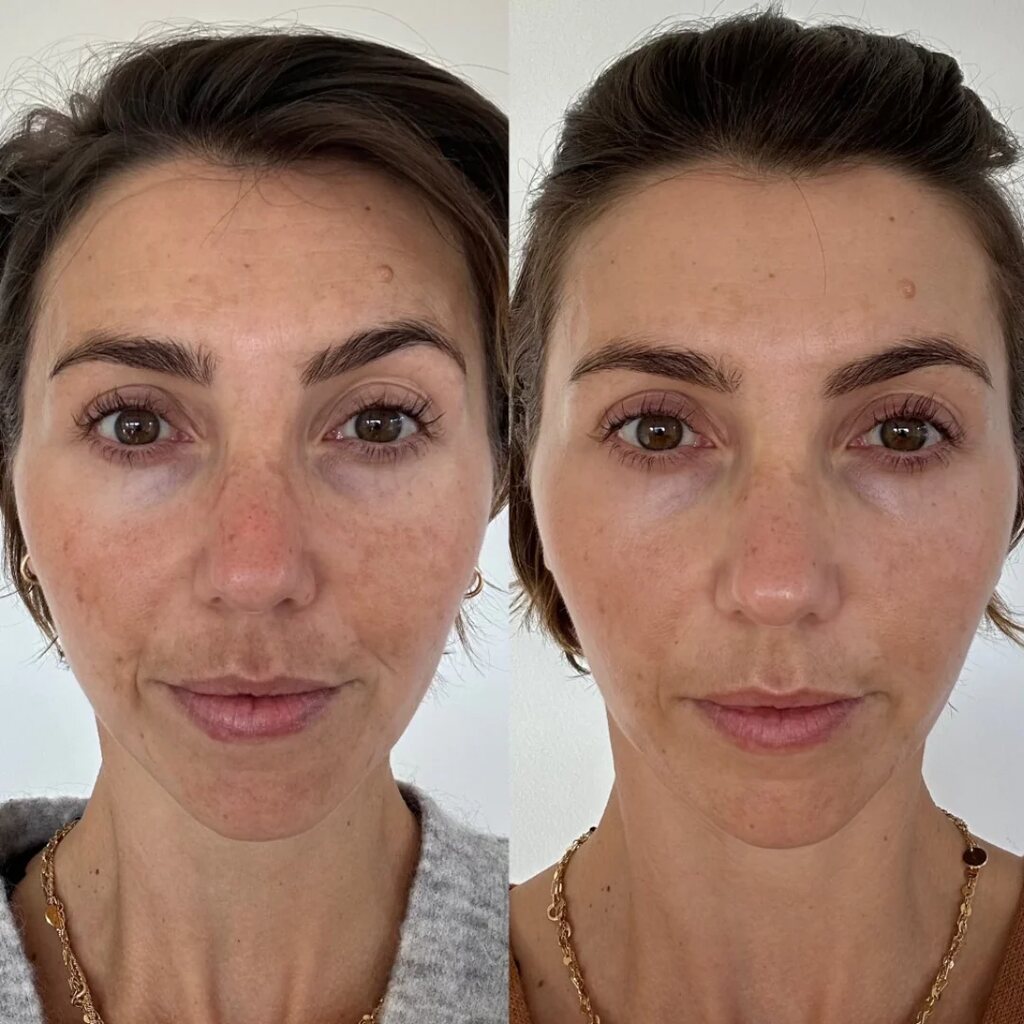
Results build gradually because they depend on your body’s own collagen production, not an immediate cosmetic effect. Early improvement can become visible within a few weeks, but full results typically take several months as the deeper collagen remodelling process completes.
This is also why maintenance matters for some people. As collagen naturally reduces over time, results can fade, and an occasional maintenance session, sometimes cited as roughly once yearly, may be recommended to help sustain results. Sun protection and not smoking are also cited as ways to help preserve collagen over time.
Treatment
Controlled microchannels stimulate the skin.
Early recovery
The skin calms over the first days to a week.
Collagen remodelling
Your body rebuilds collagen over weeks to months.
Gradual improvement
Visible change builds progressively over several months.
Who should wait or avoid microneedling?
Worth knowing honestly before booking, not discovering at a consultation. According to the American Academy of Dermatology, microneedling is not appropriate for everyone.
- Heal slowly or poorly
- Have, or have had, a keloid scar
- Have a weakened immune system due to a medical condition or medication
- Are currently being treated for skin cancer in the treatment area
- Are receiving radiation treatment
- A tan or recent significant sun exposure
- An active skin infection
- Active, painful, or pus-containing acne in the treatment area
- Taken isotretinoin recently (at least one month should pass since your last dose)
This list is not exhaustive, and suitability should always be confirmed individually during a proper consultation, not assumed from a general article.
Frequently asked questions
Book a microneedling consultation.
Every treatment starts with an assessment of your skin, previous treatments and what you would realistically like to improve.
Georgina Sookias is a Level 7 qualified medical aesthetics practitioner with 25 years of experience in the beauty industry. She works from her private studio in Fulham, London, specialising in advanced lash treatments, medical skincare and non-surgical aesthetics.
About Georgina SookiasRelated reading
Microneedling Benefits for Anti-Ageing
What microneedling really does to your skin at different depths.
Read guideWhy I Chose SkinPen Precision Elite
Why the device, depth control and needle system matter.
Read guideMicroneedling Cost in London
Prices by serum and treatment type at my Fulham studio.
Read guideSouth Park Studios, 88 Peterborough Road, Fulham SW6 3HH
This article is for informational and educational purposes only and does not constitute medical advice. Specific figures are drawn from the American Academy of Dermatology's public patient guidance. Suitability for any treatment is confirmed at individual consultation.