By Georgina Sookias, Advanced Skin Specialist & Facialist
Skin Education · Choosing an ApproachHow Do I Know Which Facial Is Right for My Skin?
You don’t need an answer before you book. The right approach depends on what your skin is actually doing, not on picking a name from a list.
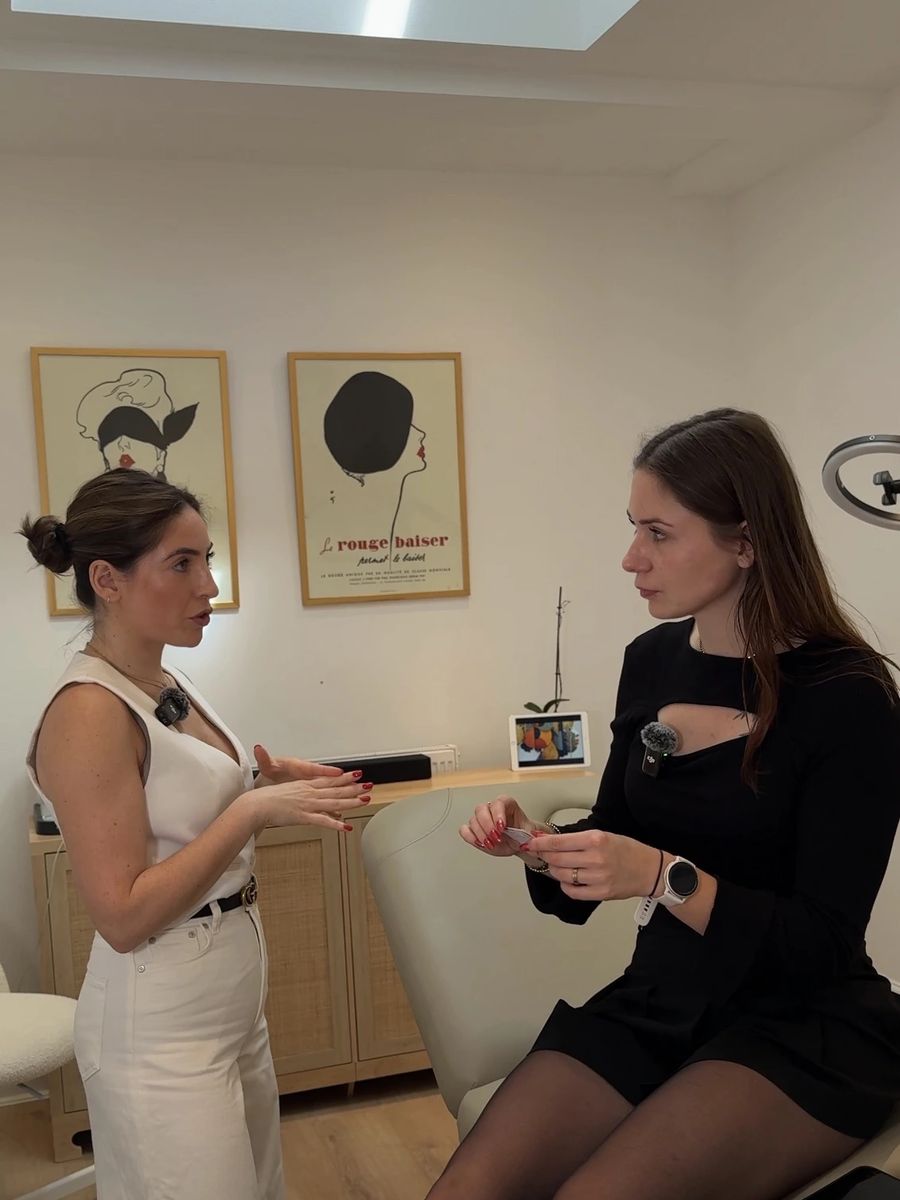
You do not need to arrive knowing which facial to choose. The right approach depends on what your skin is doing now, what may be contributing to it, your treatment history and what you realistically want to improve. Georgina considers all of this before recommending what should, or should not, form part of your plan.
Why choosing by treatment name can go wrong
Treatment names are designed to be memorable, not diagnostic. A polished name on a menu tells you what a facial is called. It doesn’t tell you whether it’s the right response to what your skin is actually doing, and those are two different questions.
Take redness. It might reflect sensitivity, recent over-exfoliation, a barrier that’s under strain, simple heat, or a concern that needs medical assessment rather than a cosmetic facial. "Dry" skin might be lipid-deficient, dehydrated, irritated by an unsuitable routine, or some combination of these, each calling for a different response. Congestion might involve blackheads, sebaceous filaments, inflammatory breakouts, product buildup, or a mixture, and pigmentation doesn’t have one single cause either. Visible texture might reflect dehydration, congestion, old scarring, irritation, or nothing more than the skin’s normal structure.
None of this is something you’re expected to work out yourself. It’s exactly what an assessment is for.
Skin type versus skin condition
These describe two different things. Confusing them is one of the most common reasons people choose the wrong starting point. This is a practical framework Georgina uses when assessing clients, not a fixed clinical measurement.
A broad baseline tendency, generally described as oilier, drier, or a combination of both. This is relatively stable and doesn’t change much day to day.
In Georgina’s experience, someone with an oily baseline can still present with dehydration or sensitivity, and someone with a dry baseline can still experience congestion. Type alone doesn’t determine condition, which is why treating by type alone can miss what’s actually happening.
What Georgina assesses before choosing a facial
Before any treatment is decided, Georgina considers a wide picture: what you’ve noticed, the current visible condition of your skin, your history and any visible signs that may be consistent with barrier disruption, sensitivity and reactivity, any breakouts or congestion, pigmentation pattern, texture and scarring, hydration, firmness and structural concerns, your home skincare and active ingredients, prescription products and medication, previous procedures, recent sun exposure, how you’ve recovered from previous treatment, and relevant personal circumstances where appropriate. Timing before an event, your expectations, and your budget all factor in too, alongside the more basic question of whether a cosmetic facial is even the appropriate starting point at all.
This isn’t a checklist you need to complete beforehand. It’s what an assessment actually looks at.
Assessed through observation and conversation rather than laboratory measurement. Why it matters: the concern you booked for is sometimes not the most relevant thing found, and a barrier that’s under strain changes what your skin can currently tolerate.
Reactive or inflamed skin needs a more conservative approach regardless of the stated concern, and steam, stronger exfoliation or active formulas may be reduced or left out accordingly.
Inflamed lesions are not treated as ordinary comedonal congestion, and any non-inflamed congestion elsewhere may still be appropriately addressed even when an active area is left alone that day.
Pigmentation and texture can each have more than one underlying pattern, and active breakouts may change the priority and timing of any scar-focused work. Every area and presentation is assessed individually rather than assumed.
Dehydration and dryness don’t respond to the same approach, and surface treatments and structural treatments serve genuinely different purposes.
An overloaded routine can be part of the picture rather than just the backdrop to it. Prescription skincare and medication may influence what is appropriate and when, so they are reviewed individually before treatment.
Recent treatment to the same area, incomplete recovery, or recent sun exposure can all change what’s appropriate now, regardless of the calendar.
A plan needs to be genuinely achievable, and sometimes the honest answer is a different starting point, or a recommendation to see a GP, dermatologist or other appropriate professional first.
The same concern can lead to different plans
Two people can describe the same concern and leave with different plans, and that’s not inconsistency, it’s the whole point of an assessment. History, sensitivity, timing, and how someone responded to previous treatment all shape what actually makes sense for them, even when the word they use to describe their skin is identical to someone else’s.
These are illustrative, anonymised examples, not real client cases. They show why the same word can lead to different conversations, not what treatment you should choose.
Notices tightness and flaking. Georgina would ask how long this has been happening and what’s currently being used at home. The history may suggest an over-active routine has put the barrier under strain. The approach starts with calming and support, not exfoliation.
Notices the same tightness and flaking. Georgina would ask the same questions. The history may point toward straightforward dehydration with no signs of barrier strain. The approach can include hydration-focused steps immediately.
Not sure what your skin needs? Begin with a Personalised Skin Consultation.
Book a Personalised Skin ConsultationWhat may form part of a personalised facial
Depending on what your skin needs, a plan may draw on professional cleansing selected for your skin, steam, dermaplaning, careful extraction, lymphatic or facial massage, a professional chemical peel, a selected professional serum, red, near-infrared, blue or green LED depending on the equipment and protocol, and a mask. Professional microneedling may form part of a wider plan as a separately assessed treatment. Topical PDRN or a professional exosome formulation may be considered where appropriate. Profhilo or injectable polynucleotides may sit within the same wider plan, following their own separate injectable assessment. HIFU may be relevant where deeper structural concerns are genuinely the priority. Personalised homecare runs through all of it.
Not every facial contains all of these stages, and more steps don’t automatically mean a better facial. Advanced treatments are never casual add-ons, injectables and HIFU always require their own separate suitability assessment, and Georgina recommends and explains the appropriate options, with the plan agreed together with you, not selected from a menu in advance.
These are examples of the roles different steps may play within a personalised plan, shown as a pathway rather than a list to choose from. They are not options you are expected to select before your consultation.
The groundwork stage. May include professional cleansing selected for your skin, and steam where appropriate.
Not every plan uses every stage. The pathway shows the range Georgina may draw from, not a sequence every client follows.
Choosing a facial for a concern versus treating a medical condition
A cosmetic assessment is not a medical diagnosis, and it isn’t designed to be one. Sudden, persistent, worsening, asymmetric or otherwise unexplained changes should be assessed by an appropriate medical professional. Where something looks like it sits outside what a cosmetic facial can appropriately address, Georgina will say so directly rather than proceeding anyway.
This isn’t a way to place yourself into a category. It shows the kind of thing that can shape a plan, decided by Georgina during your assessment, not something to work out beforehand.
What to expect when you book with Georgina
The Personalised Skin Consultation is a paid, 30-minute appointment at Georgina’s Fulham studio. It covers your history, your goals, your current routine, and an honest look at your skin’s visible condition, followed by a clear explanation of what may help and what may not. You leave with a personalised treatment and homecare plan. No treatment is included within the consultation appointment itself, and you don’t need to arrive already knowing what you want. Full terms for the consultation, including the fee, are set out on the consultation page itself.
If you’d like to understand what happens during a professional skin consultation in more depth, or what a professional facial actually involves once a plan is agreed, both are covered in their own articles. Questions about timing between appointments are answered in how often you should have a facial.
In your own words, with no treatment name required.
The visible condition, your routine, and what may be contributing.
Honestly, including where something isn’t appropriate.
Built around what your skin needs, not a name you picked in advance.
You don’t need to choose the facial first. Begin with your skin.
Book a Personalised Skin ConsultationFrequently Asked Questions
Glossary
The skin’s outermost protective function, helping limit water loss and protect against external irritants. Georgina considers the client’s history and looks for visible signs that may be associated with barrier disruption; she does not present this as an objective laboratory measurement.
A lack of water content in the skin, distinct from dryness caused by insufficient natural oils.
Skin with reduced lipids, impaired barrier function or insufficient sebum, which may occur separately from or alongside dehydration.
A general term for blocked pores, which can involve blackheads, whiteheads, sebaceous filaments, or product buildup, alone or in combination.
A blocked hair follicle or pore, appearing as a blackhead (open) or whitehead (closed).
Part of the body’s response to irritation, injury or infection, which may appear as redness, heat, swelling, discomfort or other changes.
Colour changes in the skin caused by variations in melanin production, with several possible underlying causes.
A pattern of facial pigmentation associated with sun exposure and hormonal factors, which can present with similar visible features to other forms of pigmentation, making accurate identification something that benefits from proper clinical evaluation.
Pigmentation that can follow inflammation, such as a breakout, distinct in cause from melasma though sometimes similar in appearance.
Skin that reacts more readily than average to products, heat, or environmental factors.
A manual exfoliation technique using a sterile blade to remove surface dead skin cells and fine vellus hair.
A professional treatment using a selected solution to encourage controlled exfoliation.
Manual removal of certain types of congestion, appropriate for some presentations and not others.
A professional treatment that creates controlled microchannels using a professional device and an individually selected protocol.
Light-based therapy using specific wavelengths, used conservatively as a supportive, non-abrasive addition within a protocol.
Polydeoxyribonucleotide, a material made up of purified DNA fragments. Formulations vary, and topical and injectable products are not interchangeable with one another.
A topical professional formula using extracellular-vesicle or cell-signalling technology, applied as part of a defined protocol, not injected. Formulations vary between products.
A broader category of material that includes PDRN. Topical cosmetic formulas and injectable medical-aesthetic products are distinct and not assumed to be equivalent.
A separately assessed injectable hyaluronic-acid treatment that requires its own suitability screening and is not an automatic part of a facial.
Focused ultrasound delivered at selected tissue depths depending on the device, cartridge and treatment plan, not one single fixed depth. Considered where structural concerns are relevant, following separate assessment.

Georgina Sookias, Advanced Skin Specialist & Facialist, holding the Qualifi Level 7 Certificate in Aesthetic Practice, with 25 years of experience in the beauty industry. Based at South Park Studios, Fulham, London.
Read more about GeorginaRelated reading
What Does a Professional Facial Actually Do?
What each stage does, why it’s chosen, and what a facial can and cannot do.
Read guideWhat Happens at a Professional Skin Consultation?
Why assessment comes before treatment, and how a personalised plan is built.
Read guideHow Often Should You Have a Facial?
Why the right interval depends on your skin, not a fixed calendar.
Read guide- Lee YB, Park HJ, Kwon HJ, et al. "Baumann Skin Type in the Korean Male Population." Annals of Dermatology. 2019;31(6):621-630. A questionnaire-based, self-reported classification study describing four separate skin-classification parameters (oily/dry, sensitive/resistant, pigmented/non-pigmented, wrinkled/tight). Cited to support that skin cannot be usefully understood through a single label; the practical distinction between stable skin type and changeable skin condition described in this article is Georgina’s own assessment framework, informed by this classification approach, not a claim proven word-for-word by the study itself.
- Mansilla-Polo M, Díaz-Gómez CJ, Morgado-Carrasco D. "Clinical and Dermoscopic Characteristics of Facial Hyperpigmentation Disorders in Skin of Color." Actas Dermo-Sifiliográficas. 2026;117(7):104637. DOI: 10.1016/j.ad.2026.104637. Cited for the finding that melasma and post-inflammatory hyperpigmentation can present with similar clinical features, making accurate identification something that requires thorough history, examination and dermoscopic evaluation, supporting this article’s conservative, non-diagnostic treatment of pigmentation patterns.
South Park Studios, Fulham, London SW6