What Does a Professional Facial Actually Do?
"Facial" is one of the broadest words in beauty. It can describe anything from a simple cleanse-and-mask service to an assessment-led protocol combining several carefully selected stages. The word alone tells you very little. What matters is what has been chosen, why it has been chosen and whether it is appropriate for your skin.
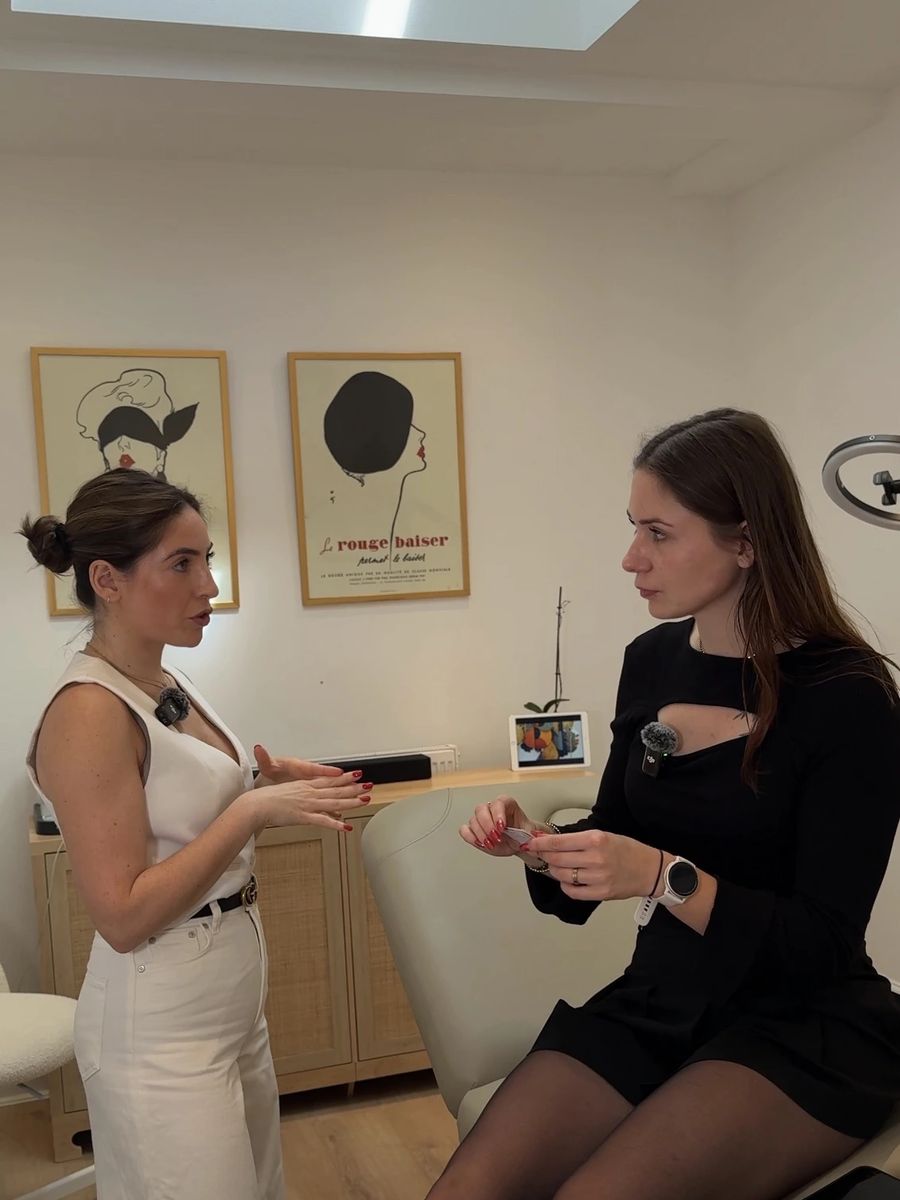
This article explains what an assessment-led professional facial can and cannot do, once your skin has already been properly looked at. It follows on from understanding what happens at a professional skin consultation. This is the next layer down: once Georgina knows what your skin needs, what does she actually do about it?
What is a professional facial?
A facial is not one fixed thing. Its quality and purpose depend entirely on the assessment behind it, the practitioner performing it, the products and equipment used, and the protocol chosen for that particular appointment.
Two people can book "a facial" and receive genuinely different treatments, and that is not inconsistency. It is the point. A facial built around your skin that day looks different from a facial built around someone else’s skin, or even your own skin on a different day.
What should happen before the facial begins?
A professional facial does not start with a product being applied. It starts with a conversation and an assessment, even a brief one at each visit. This covers your relevant treatment and health history, your current skincare, any recent reactions or procedures, an observation of your skin’s current condition, agreed priorities for that session, and a check for suitability and contraindications.
None of this implies a medical diagnosis. It is the groundwork that decides which of the possible stages below are actually appropriate for you today, and which are not.
What is happening beneath the surface?
This is a simplified, educational illustration. It cannot diagnose your skin or determine the cause of a visible concern. Treatment depth and suitability vary by device, protocol and individual skin, and are only ever confirmed through an in-person assessment.
Educational anatomical illustration — simplified for clarity and awaiting anatomical / medical-illustration accuracy review.
Stratum corneum
What it is: The outermost part of the epidermis, made of dead, flattened cells.
General, established function: Forms the skin's first barrier against the outside world.
Article scope note: The facial stages discussed in this article are not presented as treatments for subcutaneous tissue.
Acne and congestion, marks and scars
Images are illustrative and cannot diagnose the cause or type of a skin concern. Painful, persistent, worsening or inflammatory breakouts may need assessment by an appropriate medical professional.
Open comedone (blackhead)
An open comedone containing sebum and keratin. Its exposed surface appears dark through oxidation. It is not dirt.
No single treatment is appropriate for every form of scarring, and a facial alone does not correct structural scarring. Georgina assesses which pattern, if any, is present before discussing what may help.
What the skin may be showing
Dehydration and tightness
A tight feeling, fine dry lines, dullness despite feeling oily in places.
Surface dehydration, a disrupted barrier, lipid deficiency, or a routine working against the skin.
The current routine, what's changed recently, and whether the barrier feels compromised.
If the barrier is compromised, calming and barrier support may come before intensive hydration.
A website cannot determine the cause of a skin concern. Sudden, persistent, worsening, asymmetric or otherwise unexplained changes should be assessed by an appropriate medical professional before cosmetic treatment is considered.
Not sure what your skin is showing? Begin with an assessment rather than choosing a treatment name.
Book a Personalised Skin ConsultationInside a professional facial
This is an example journey. Not every facial contains the same stages, and the order and content depend entirely on what your skin needs that day.
We assess
A quick check-in on your skin that day, even if you were assessed in more depth at a previous consultation. Skin changes, and today's protocol reflects today's skin.
We prepare
Cleansing and any necessary preparation, chosen for your skin's current condition, not applied as a fixed first step regardless of what you need.
We select the appropriate treatment stage
Whichever combination of exfoliation, dermaplaning, a peel, extraction or another step is genuinely right for you that day, and only those.
We support the skin
Hydration, barrier support, a professional formula or LED, where appropriate, to help the skin respond well to what has just been done.
We finish and protect
Finishing products and SPF, since treated skin needs protecting, not left exposed.
We plan what happens next
What to do and avoid at home, and whether a further appointment or a different next step makes sense.
What might form part of your facial?
These are examples of the stages Georgina may draw from when creating a facial. They are not a checklist, and they are not options the client is expected to select in advance.
Includes: Professional cleansing, steam where appropriate.
What it is: The groundwork stage, clearing the way for everything that follows.
Why it might be included: Your skin needs preparing before anything more active is applied.
Why it might be omitted: Steam specifically may be left out for sensitive or reactive skin.
What Georgina considers: Current skin sensitivity, and whether warmth would help or aggravate.
Includes: Dermaplaning, a carefully selected chemical peel.
What it is: Surface-level refinement, chosen according to what your skin can currently tolerate.
Why it might be included: Surface texture or dullness may benefit from a carefully selected refining step.
Why it might be omitted: Active acne, irritation, or recent treatment to the same area.
What Georgina considers: Skin sensitivity, barrier condition, current products and treatment history.
Includes: Appropriate extraction.
What it is: Targeted removal of suitable congestion, not a default step.
Why it might be included: Visible blackheads or congestion suitable for manual extraction.
Why it might be omitted: Active inflammatory acne, which extraction can worsen.
What Georgina considers: The type of congestion present, and whether it is genuinely suitable for extraction that day.
Includes: Facial or lymphatic massage, where suitable.
What it is: A supportive, comfort-focused stage, not included in every appointment.
Why it might be included: Your skin and circumstances suit it that day.
Why it might be omitted: It may not suit the aim of that appointment or the other treatment stages being performed.
What Georgina considers: The wider protocol, client comfort and whether massage has a clear role that day.
Includes: Serum, mask, topical PDRN or a professional exosome formulation where appropriate.
What it is: Formula selected specifically for the aim of that day's protocol.
Why it might be included: Your skin and the day’s priority call for it.
Why it might be omitted: It would not suit or complement what else is being done.
What Georgina considers: Compatibility with the rest of the protocol and your skin's current condition.
Includes: Red, near-infrared, blue or green LED, only where the device, evidence and treatment aim support its use.
What it is: A calm, non-abrasive supportive addition, not a treatment that leads a plan on its own.
Why it might be included: It genuinely supports the aim of that day's protocol.
Why it might be omitted: Not every colour treats every concern, and it is not added simply because a device offers it.
What Georgina considers: Which wavelength, if any, is appropriate for the actual goal that day.
Includes: Barrier-supporting finishing products, SPF, homecare advice.
What it is: The closing stage that protects the results of everything before it.
Why it might be included: Always relevant in some form.
Why it might be omitted: Specific products vary, but this category itself is rarely skipped entirely.
What Georgina considers: What your skin needs to recover well and what to continue at home.
Potential stages within a facial appointment
Cleansing, steam, dermaplaning, massage, extraction, a selected peel, a professional serum or formula, LED, a mask, finishing products and SPF.
Advanced treatments elsewhere in the programme
Microneedling, HIFU, Profhilo and injectable polynucleotides require their own suitability assessment, sequencing and treatment protocol. They may form part of the same wider skin plan without necessarily happening during a facial appointment itself, and they are never presented as casual facial add-ons.
What each stage does, and does not, do
Cleansing removes makeup, sunscreen, surface debris and excess oil. It is not a "detox," and nothing about cleansing pulls toxins out of your skin. It creates a clean surface for the carefully selected stages that follow.
Steam does not open the pores in the way most people imagine. Pores do not have muscles, and they do not physically open and close like a door. According to the American Academy of Dermatology, as reported by Medical News Today, steaming is not recommended as a method for unclogging pores, and what looks like a pore "opening" or "closing" is actually the pore expanding or appearing smaller as surface debris builds up or clears, not a structural change in the pore itself. Heat and steam are also not suitable for every skin, particularly reactive or highly sensitive skin, which is why this step is included selectively rather than automatically.
Exfoliation encourages the shedding of surface skin cells, which can improve how the skin looks and feels. It does not fix every form of pigmentation, congestion or scarring, and stronger is not automatically better. A professional peel provides controlled exfoliation using a solution selected for the concern and your skin’s tolerance, and is not something to self-select from a menu of peel names.
Dermaplaning removes surface dead skin cells and fine vellus hair using a sterile blade, leaving the skin smoother. A persistent myth suggests that hair grows back thicker or darker afterward. According to Dr. Melissa Piliang of the Cleveland Clinic, this is a misconception: removing vellus hair at the surface does not change the follicle or cause the hair to become thicker or darker. Dermaplaning is a refining step, not an answer to every concern, and it is not automatically appropriate for active acne or certain other skin conditions.
Every stage is judged by whether it has a reason for your skin that day — not by how many steps a facial contains.
Depending on the device, wavelength and purpose of the protocol, Georgina may use red, near-infrared, blue or green LED. The colour is not selected decoratively, and no wavelength is automatically suitable for every concern. A serum or professional formula may be selected to support the specific aim of that day’s protocol. Topical PDRN or a professional exosome formulation may be considered within selected protocols where appropriate, but they are not the centrepiece of every facial. Both are clearly different from injectable polynucleotides, which are administered by injection following a separate suitability assessment, not applied as part of a facial.
Microneedling is an advanced professional treatment in its own right, not a step automatically added to a facial. Profhilo and injectable polynucleotides are separately assessed injectable treatments that may form part of a wider skin programme, never casual additions folded into a facial appointment. HIFU is designed for different treatment targets from surface facial steps and is assessed as a separate advanced treatment, with its own dedicated page on this site.
Facial myths, explained
Tap a myth to reveal the reality.
Reality: Pores do not physically open and close. Steam may sometimes be used selectively as a preparatory or comfort step, but it should not be described as opening or unclogging pores, and strong evidence that it makes extraction easier is limited.
Reality: Tingling is a sensation, not evidence that a product or treatment is effective. It can occur with some active ingredients, but it may also indicate irritation. Increasing discomfort, burning or persistent stinging should never be treated as proof that a treatment is working.
Reality: Redness after treatment is usually a sign of skin reacting to a stimulus, such as exfoliation or extraction, not evidence of a better result. Persistent or excessive redness is worth mentioning, not treating as a badge of a "strong" facial.
Reality: Stronger is not automatically better. Over-exfoliated skin can become more sensitive, more reactive and slower to recover, which works against the result you actually want.
Reality: A single appointment addresses what is realistic for your skin that day. Complex or long-standing concerns generally need a plan across more than one appointment, alongside homecare.
Reality: "Dry" can mean dehydration, a disrupted barrier, insufficient lipids, or an irritating routine. Each needs a different response, and more hydration alone does not fix all of them.
Reality: Extractions are appropriate for certain types of visible congestion, not a default step every skin needs at every appointment.
Reality: Layering more products and steps is not automatically more effective, and can overwhelm the skin rather than benefit it. A facial is judged by whether each step has a reason, not by how many steps it contains.
During the appointment and after you leave
What follows depends entirely on what was actually performed. This is a general guide, not a guarantee.
You can expect a brief check-in, the treatment stages chosen for your skin that day, and time for any questions as you go.
Skin often feels clean and may look slightly flushed or refreshed, depending on what was done. Some steps, like extraction or a stronger peel, may leave temporary redness or sensitivity.
What happens next depends entirely on the stages performed. Georgina will explain the expected response and provide treatment-specific aftercare. Any reaction that is worsening, unexpected or lasts beyond the guidance provided should be raised rather than assumed to be normal.
Where renewal-focused steps were included, such as certain peels or a course of treatment, changes may continue to develop gradually. This is not guaranteed for every facial, only where the protocol was specifically aimed at longer-term change.
Homecare does the ongoing work. What you use, and how consistently, affects how well the results of your appointment are maintained and built upon.
What can a facial not do?
A facial cannot diagnose a medical skin condition, correct every concern in one appointment, permanently shrink pores, remove all pigmentation, replace appropriate medical care, guarantee a particular outcome, compensate indefinitely for unsuitable homecare, or automatically produce structural lifting. Being clear about these limits is part of treating you honestly, not a disclaimer added as an afterthought.
Why homecare matters
What you do between appointments genuinely affects how professional treatment performs. Cleansing, moisturising, SPF and appropriately chosen active ingredients support and extend what happens in the studio. A strong in-studio treatment can be undermined by an unsuitable routine at home, and a considered routine can meaningfully extend the benefit of a single appointment.
What should a professional facial leave you understanding?
By the end, you should understand what Georgina observed, what was actually done, why each stage was included, what was deliberately left out, what to expect afterward, what to use or avoid at home, whether a further appointment makes sense, and whether medical assessment would be advisable for anything noticed along the way.
A cosmetic consultation, or a facial itself, does not diagnose medical conditions. A website cannot determine the cause of a skin concern either. Sudden, persistent, worsening, asymmetric or otherwise unexplained changes should be assessed by an appropriate medical professional, and active, inflammatory or painful skin concerns may need medical assessment before cosmetic treatment is considered. Treatment suitability is always individual.
Georgina’s treatment philosophy
Assessment comes before treatment, always. There is no fixed treatment-menu mindset here, and no pressure to select a modality in advance. Your plan may involve more than one approach, and every stage included should have a clear reason behind it. Not every client needs an advanced treatment, and homecare is treated as a genuine part of the plan, not an afterthought. Sometimes the right decision is to do less. Sometimes treatment should be delayed rather than performed on schedule. Injectable treatments are always separately assessed, and nothing is recommended simply because it happens to be available that day.
Skin terminology, explained
The outermost protective function of the skin, primarily associated with the stratum corneum, helping limit water loss and protect against external irritants.
The outer layer of the skin, responsible for barrier defence, pigment production and constant cell renewal.
The layer beneath the epidermis, containing collagen, elastin, blood vessels and structural support for the skin.
The process of removing surface dead skin cells, either manually or with a chemical exfoliant.
The natural, ongoing shedding of dead skin cells from the surface of the skin.
A lack of water content in the skin, distinct from dryness caused by insufficient natural oils.
Skin with reduced lipids, impaired barrier function or insufficient sebum, which may occur separately from or alongside dehydration.
The natural oil produced by the skin's sebaceous glands.
A blocked hair follicle or pore, appearing as a blackhead (open) or whitehead (closed).
Part of the body's response to irritation, injury or infection, which may appear as redness, heat, swelling, discomfort or other changes. Visible redness alone does not establish its cause.
Colour changes in the skin caused by variations in melanin production, with several possible underlying causes.
A manual exfoliation technique using a sterile blade to remove surface dead skin cells and fine vellus hair.
A professional treatment using a selected solution to encourage controlled exfoliation.
A professional treatment that creates controlled microchannels using a professional device and an individually selected protocol.
Light-based therapy using specific wavelengths, used conservatively as a supportive, non-abrasive addition within a protocol.
Polydeoxyribonucleotide, a material made up of purified DNA fragments. Available as topical or injectable formulations depending on the specific product; not every PDRN product exists in both forms.
A topical professional formula using extracellular-vesicle or cell-signalling technology, applied as part of a defined protocol, not injected.
A broader category of material that includes PDRN. Used in topical cosmetic formulas and, separately, in injectable medical-aesthetic treatments, depending on the specific product; topical and injectable forms are not interchangeable.
Ingredients in a skincare product intended to have a specific effect on the skin, such as retinoids, acids or antioxidants.
Sun Protection Factor, primarily a measure of protection against UVB. Broad-spectrum sunscreen also provides UVA protection.
Frequently Asked Questions
You do not need to choose the facial first. Begin with your skin.

Georgina Sookias is an Advanced Skin Specialist & Facialist with a Qualifi Level 7 Certificate in Aesthetic Practice and 25 years of experience in the beauty industry. She works from her private studio in Fulham, London.
Read more about GeorginaRelated reading
- Medical News Today. "What are the benefits of steaming your face?" Citing American Academy of Dermatology guidance that facial steaming is not recommended for unclogging pores. medicalnewstoday.com — cited for the claim that pores do not literally open or close.
- Piliang M, quoted in Cleveland Clinic. "Dermaplaning At Home: Is It Safe?" health.clevelandclinic.org — cited for the claim that vellus hair does not grow back thicker or darker after dermaplaning.
- Cleveland Clinic. "Dermaplaning." my.clevelandclinic.org — cited for dermaplaning contraindications including active acne, moles, psoriasis, skin burns and rashes.
- Couturaud V, Le Fur M, Pelletier M, Granotier F. "Reverse skin aging signs by red light photobiomodulation." Skin Research and Technology. 2023;29(7):e13391. DOI: 10.1111/srt.13391 — a study of a specific red-light LED mask and protocol, cited here as evidence concerning that specific red-light protocol only.
This article is for informational and educational purposes only and does not constitute medical advice. Treatment suitability is confirmed at individual consultation.
South Park Studios, Fulham, London SW6