How Long Do Polynucleotides Last? Results by Area, Product & Skin Type (2026)
Quick answer
Polynucleotide results typically last between 6 and 12 months. The exact duration depends on the product used, the treatment area, whether you completed a full course, your age, skin condition, and lifestyle factors. Under-eye results with Vitaran Eyes tend to last 9 to 12 months. Face and body results with Plenhyage XL Strong typically last 6 to 9 months. Most clients maintain results with one or two sessions per year after completing their initial course.
On this page
This is one of the questions I get asked most often at my Fulham clinic, usually before someone books their first treatment. And it is a good question to ask, because the honest answer is more nuanced than the simple 6 to 12 months you will find on most clinic websites.
The duration of polynucleotide results is not fixed. It is influenced by which product is used, how many sessions you have, which area is treated, how old your skin is, and how well you look after it between treatments. Understanding these factors helps you plan a realistic treatment programme and set the right expectations from the start.
At a glance: how long results typically last
The short answer by product
If you want a quick benchmark before the detail:
At my Fulham clinic I use both. The choice between them affects not just how long results last but how intense the regenerative response is. You can read the full comparison in my polynucleotides cost UK guide.
How long do polynucleotides last by treatment area?
Duration varies meaningfully depending on where the treatment is delivered.
Under eyes
The periorbital area responds particularly well to polynucleotides and tends to hold results longer than most other areas. With Vitaran Eyes, most clients see results lasting 9 to 12 months. The skin here is thin and the regenerative response to polynucleotides is strong, meaning the quality improvement is noticeable and tends to persist well.
For a full breakdown of under-eye treatment specifically, see my guide on polynucleotides under eyes.
Face (full face treatment)
Full face polynucleotide results typically last 6 to 12 months depending on the product and the client's skin condition. Clients in their 30s with early signs of ageing tend to see results at the longer end of that range. Clients in their late 40s or 50s with more significant skin deterioration may find results last closer to 6 to 9 months and benefit from more frequent maintenance.
Neck and decolletage
The neck and chest area tends to hold results for 6 to 9 months. This area has thinner, more fragile skin that is often more significantly photoaged, which means the regenerative response is strong but the skin may require more frequent maintenance to sustain improvement.
Hands
Similar to the neck. Results typically last 6 to 9 months. The hands are exposed to more environmental stress (sun, washing, drying) which affects longevity.
Scalp and hair restoration
Polynucleotide treatments for the scalp to support hair growth typically require ongoing maintenance every 4 to 6 months for sustained results. This area tends to need more regular treatment than facial zones.
What affects how long results last?
This is the section most clinic websites skip. It matters a lot.
1. Whether you completed a full course
A single session produces improvement but the results do not last as long as a full course of 3 sessions. This is because a course builds a cumulative regenerative response. Each session reinforces and extends the effects of the previous one. Clients who complete a full course consistently report longer-lasting results than those who have a single treatment.
2. Your age and skin condition at the time of treatment
Younger skin with mild ageing tends to respond more robustly and hold results longer. More significantly aged or damaged skin regenerates well but the underlying ageing process continues, meaning more frequent maintenance is needed to sustain the improvement.
3. Product concentration
Higher concentration products like Plenhyage XL Strong (25mg/ml) produce a more intense regenerative response, which is why they are used for intensive repair. However, the more intensive the repair required, the more frequently maintenance may be needed as the skin continues to age. Vitaran's 20mg/ml concentration is well-suited to maintenance and longevity in skin that responds well.
4. Lifestyle factors
Sun exposure is the biggest accelerator of skin ageing and the most significant factor in shortening polynucleotide results. Clients who use consistent SPF, avoid excessive sun, do not smoke, stay hydrated, and maintain good sleep tend to see their results last significantly longer. This is not a scare tactic: it is basic skin biology.
5. Combining with other treatments
Clients who combine polynucleotides with exosomes via microneedling or with Profhilo as part of a broader regenerative programme tend to see results that compound over time. The treatments support each other and the overall skin quality improvement is greater and more durable than any single treatment alone. If you are deciding between regenerative treatments, my full comparison of exosomes vs polynucleotides covers how they work together.
What happens when polynucleotide results wear off?
This is something worth understanding clearly before you start.
Polynucleotide results do not disappear suddenly. There is no cliff edge where you wake up and the results are gone. The improvement fades gradually over several months as the skin continues its natural ageing process and the collagen and elastin stimulated by the treatment slowly turns over.
What most clients notice is that their skin gradually returns toward its pre-treatment baseline rather than dropping below it. Importantly, the structural improvement in the dermis tends to mean the skin ages from a higher baseline than it would have without treatment.
This is why consistent maintenance is worth thinking about as part of a long-term skin health programme rather than a one-off fix.
The mistake most people make
Many people judge polynucleotides too early.
The treatment continues working for several months after the final session as collagen production and tissue repair continue to build. Looking at your skin two weeks after treatment is very different from looking at it three or six months later. The most significant results often appear 8 to 12 weeks after the final session in a course, not immediately after each appointment.
This is also why a single session rarely tells the full story. Clients who have one session, wait four weeks, and decide it has not worked have usually not given the treatment enough time or enough stimulus to produce its full effect. A course exists for a reason.
What actually happens after treatment
What I see most often at my Fulham clinic
Most clients I see come back around the 9 to 12 month mark, not when their results have fully worn off but when they notice the skin starting to lose some of the density and bounce it had at peak results. That timing tends to produce the best outcomes because we are maintaining quality from a higher baseline rather than rebuilding from scratch.
The clients who see the most dramatic long-term improvement are those who treat consistently over 2 to 3 years. The cumulative effect of sustained collagen stimulation and tissue repair is significantly greater than any single course of treatment alone.
Not sure whether you need a maintenance session yet? Send me a photo on WhatsApp and I will tell you honestly whether I would recommend another treatment now or whether I would wait.
Get honest adviceVitaran vs Plenhyage XL Strong: which lasts longer?
People often assume the stronger product lasts longer. It is not quite that simple.
Vitaran (20mg/ml) tends to produce results that last 9 to 12 months in the face and under-eye area. Its anti-inflammatory properties and well-tolerated formulation make it excellent for regular maintenance programmes. Many clients return once a year for a single top-up session after completing their initial course.
Plenhyage XL Strong (25mg/ml) produces a more intensive repair response, which makes it the better choice for significant scarring, photoageing, and body areas. Results typically last 6 to 9 months. The higher concentration means stronger initial stimulation but the areas it targets (more damaged, more aged skin) often require more regular maintenance.
In practice: for a client in their late 30s wanting under-eye maintenance, Vitaran with annual top-ups is often the most cost-effective and sustainable long-term approach. For a client in their 40s with significant scarring or skin damage, Plenhyage XL Strong every 6 to 9 months is the more appropriate protocol.
The recommended maintenance protocol
After completing an initial course of 2 to 3 sessions:
These are guidelines, not rules. I assess each client individually at review and adjust the maintenance plan based on what I see in the skin rather than a fixed schedule.
What this looks like in practice
A typical client I see for polynucleotide maintenance at my Fulham clinic is someone in their early 40s who completed their initial course 10 to 11 months ago. Their skin is still noticeably better than before they started treatment. They are not back to square one. But they can feel the skin starting to lose some of the bounce and density it had at peak results. A single maintenance session restores that quality and sets them up for another 9 to 12 months.
That is the rhythm most of my clients fall into. Initial course of 3 sessions, then one or two maintenance sessions a year depending on their skin and goals.
Real result · Polynucleotide skin regeneration
Photo shared with patient consent.
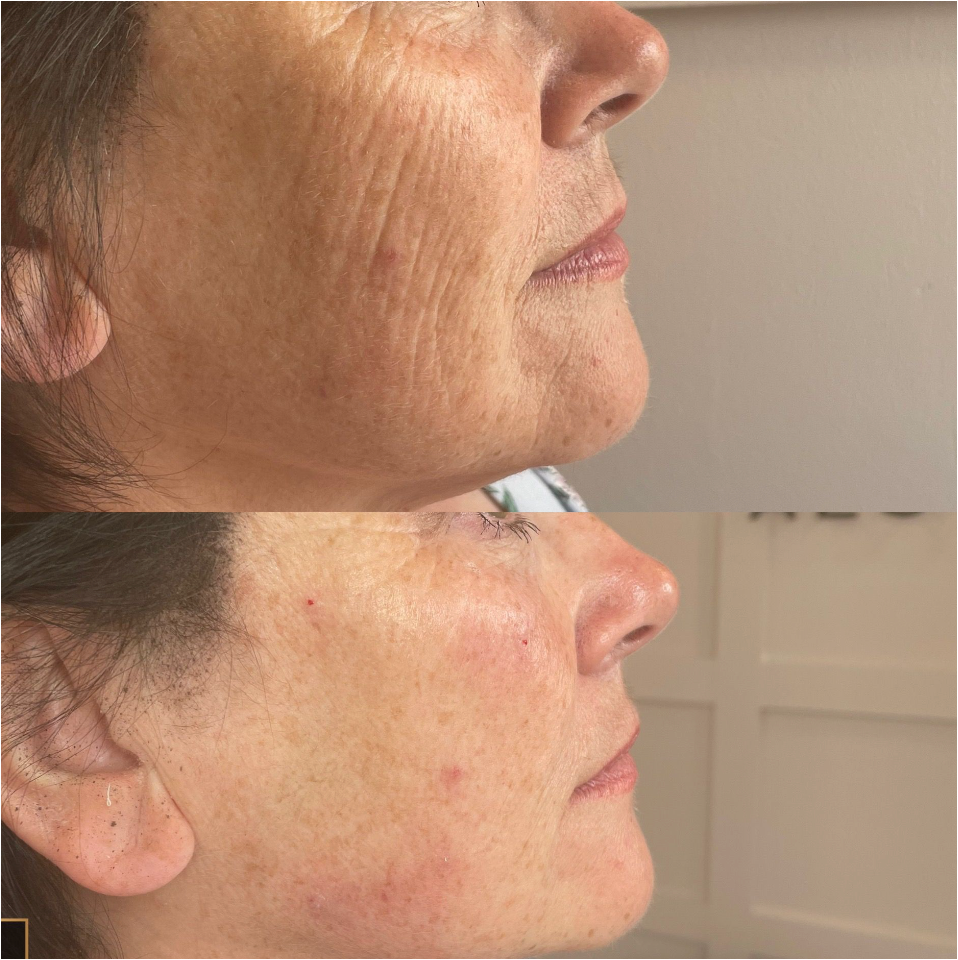
Results vary depending on skin quality, anatomy, lifestyle, and treatment history.
Due a maintenance session?
Send me a photo on WhatsApp
I will tell you honestly whether I would recommend a polynucleotide top-up now or whether your results are still holding well enough to wait.
Send a photo on WhatsAppWatch a Treatment in Clinic
Is it worth maintaining long term?
Yes, in my honest opinion, for most clients who respond well to polynucleotides.
The cumulative benefit of consistent treatment over 2 to 3 years is significantly greater than a single course. Each maintenance session builds on the collagen and tissue quality improvements from previous treatments. Clients who maintain consistently tend to see their skin age more slowly and from a higher quality baseline than those who treat once and stop.
The cost of annual or twice-yearly maintenance is also significantly lower than the initial course investment, which makes the ongoing programme more accessible once the foundation is established.
If you are unsure whether your skin is responding well enough to make maintenance worthwhile, I will always tell you honestly at your review appointment. Not everyone needs ongoing treatment at the same frequency and the right answer varies per person. You can also compare options in my polynucleotides vs Profhilo guide, or explore the treatment on my polynucleotides Fulham page.
Pricing at my Fulham clinic
Complimentary Red Light Therapy
Included at no additional cost with qualifying skin treatments.
All regenerative skin treatments at Georgina’s Fulham studio include complimentary professional Red Light Therapy.
Our professional system combines 630nm and 660nm red light with 810nm, 830nm and 850nm near infrared wavelengths. These wavelengths have been widely studied for their ability to support skin health, cellular energy production and collagen synthesis.
As part of our regenerative approach to skin health, we include professional Red Light Therapy after qualifying treatments to support the skin during the recovery phase and enhance the overall treatment experience at no additional cost.
This is provided complimentary with all qualifying skin treatments as part of our regenerative approach to skin health.
Learn more about red light therapyFrequently asked questions
Polynucleotides · Fulham SW6
Book a consultation in Fulham, London
My Skin Consultation is £50, redeemable against eligible treatments of £250 or more. I will assess your skin, review your previous treatment if applicable, and recommend the right protocol and frequency for your specific goals.
South Park Studios, 88 Peterborough Road, Fulham SW6 3HH
Serving clients across Fulham, Chelsea, Wandsworth, Battersea, Clapham, Putney and South West London.
Recommended reading
Polynucleotides cost UK
Real UK pricing and which product is best.
ViewPolynucleotides under eyes
Dark circles and under-eye rejuvenation.
ViewExosomes vs Polynucleotides
How the two regenerative treatments compare.
ViewPolynucleotides vs Profhilo
Which regenerative injectable suits you?
ViewPolynucleotides Fulham
The full treatment page and what to expect.
ViewThis article is for informational and educational purposes only. It does not constitute medical advice. Always consult a qualified practitioner before starting any aesthetic treatment.