Tear Trough Filler vs Polynucleotides: Which Is Right for Your Under Eyes? (2026 Honest Guide)
Quick answer
Tear trough filler adds volume to the hollow beneath the eye using hyaluronic acid. Polynucleotides rebuild and strengthen the skin itself using DNA-derived regenerative molecules. They treat different things. Filler is the right choice when there is a true structural hollow from volume loss. Polynucleotides are the right choice when the concern is thin or crepey skin, dark circles from vascular shadowing, or skin quality deterioration. Many clients benefit from both, used together or in sequence.
The question is not which is better. The question is which one matches what your under-eye area actually needs.
On this page
One of the most common conversations happening in aesthetics right now is this one. And it is getting more urgent because filler fear is genuinely rising.
Over the last few years, the aesthetics industry has seen a significant increase in clients coming forward with concerns about previous tear trough filler: migration, persistent puffiness, the Tyndall effect (a bluish tint under the skin from superficially placed hyaluronic acid), and difficulty dissolving older treatments. Alongside this, a growing number of clients are being told they are not suitable for tear trough filler because their skin is simply too thin to hold the product.
This is not a reason to dismiss filler. Used correctly, in the right candidate, tear trough filler is one of the most impactful treatments available for under-eye hollowness. The problem is not filler itself. The problem is filler placed in skin that needed regeneration, not volume.
This guide gives you the honest clinical picture. I use both treatments in my Fulham clinic. Here is exactly when each is appropriate, what they can and cannot do, and how I decide which one to recommend.
At a glance
What tear trough filler actually does
Tear trough filler is a hyaluronic acid injectable placed beneath the eye in the tear trough groove. It physically occupies space, adding volume to the hollow area and reducing the shadowing that makes the under-eye area look sunken or tired.
What it does well
- Corrects a true structural hollow from volume loss
- Produces immediate visible results
- Can dramatically improve the appearance of dark shadows caused by depth
- Results last 9 to 18 months depending on the product and placement
- Is reversible with hyaluronidase
What it does not do
- Improve skin quality, texture, or thickness
- Treat dark circles caused by thin or vascular skin
- Strengthen fragile periorbital tissue
- Regenerate collagen or elastin
The risks when used incorrectly
Hyaluronic acid attracts water. In the wrong candidate or with poor technique, this causes persistent puffiness that worsens over time. The Tyndall effect occurs when filler is placed too superficially, creating a bluish tint visible through thin skin. Migration can occur when filler moves from the original injection site. These are not rare complications. They are the most common reason clients come to me having previously had filler dissolved.
What polynucleotides actually do under the eyes
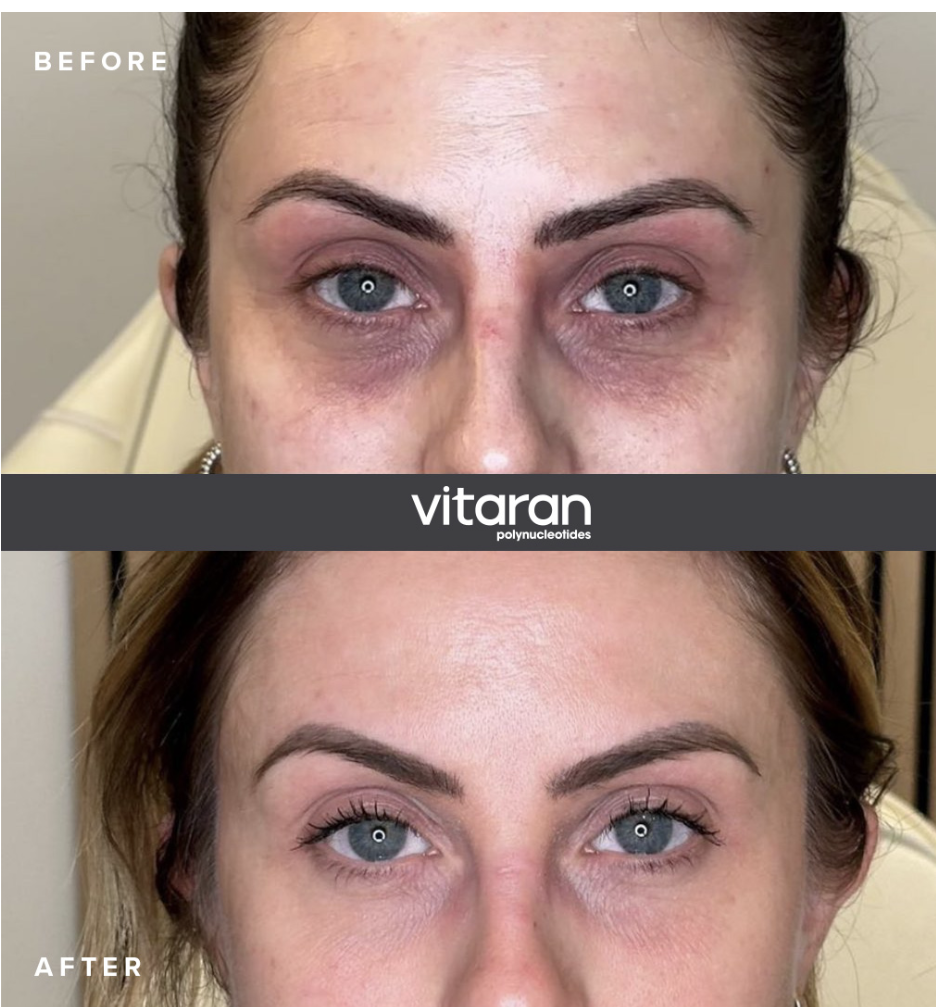
Polynucleotides are highly purified DNA fragments derived from salmon trout. When injected into the periorbital skin, they stimulate fibroblasts to produce collagen and elastin, attract and retain moisture within the dermis, reduce inflammation, improve microcirculation, and strengthen the structural integrity of thin skin.
They do not add volume. They improve the quality of the tissue itself.
What they do well
- Strengthen thin, fragile periorbital skin
- Reduce dark circles caused by vascular shadowing through thin skin
- Improve skin density, hydration, and texture
- Reduce crepiness and fine lines
- Create a natural, gradually improving result over a course of treatment
- Anti-inflammatory: excellent for sensitive or reactive periorbital skin
What they do not do
- Replace lost structural volume
- Correct a deep tear trough groove from fat pad descent
- Produce immediate results after a single session
At my Fulham clinic I use Vitaran Eyes for under-eye polynucleotide treatments specifically. This is a dedicated periorbital formulation developed by Fox Pharma at 20mg/ml, calibrated specifically for the delicate under-eye area. Using a product designed for periorbital use rather than a general-purpose formulation matters both for results and for safety.

For the full breakdown of polynucleotide under-eye treatment, see my dedicated guide on polynucleotides under eyes.
The core difference
This is the single most useful way to think about these two treatments:
Tear trough filler treats the space beneath the skin. It fills a structural deficit.
Polynucleotides treat the skin itself. They rebuild what the skin has lost.
The reason so many clients end up with poor filler results is that they had a skin quality problem that was treated with a volume solution. Thin, fragile periorbital skin cannot hold hyaluronic acid gel without risking puffiness, migration, or the Tyndall effect. The filler is not wrong. The diagnosis was.
Side-by-side comparison
Not sure which category you fall into? Send me a photo on WhatsApp and I will give you my honest clinical assessment.
Get honest adviceQuick self-check: which do you actually need?
You likely need polynucleotides if
- Your dark circles are bluish or purplish from blood vessels showing through thin skin
- Your under-eye skin looks crepey, papery, or has lost density
- You have fine lines under the eyes
- You have had filler complications or are concerned about filler risks
- You want gradual, natural improvement over a course of treatment
- Your skin is sensitive, reactive, or you have rosacea
You likely need tear trough filler if
- There is a visible structural hollow or deep groove beneath the eye
- The shadowing is caused by depth and loss of volume rather than skin thinness
- Your skin quality is good and holds moisture well
- You want immediate visible results
- A practitioner has assessed you and confirmed a true tear trough deformity
You may need both if
- There is both a structural hollow AND skin quality deterioration
- You have previously had filler dissolved and want to address both the volume and skin quality simultaneously
- You are in your 40s or 50s with multiple under-eye concerns
When filler is genuinely the right answer
I want to be clear about this because most polynucleotides vs filler articles written by clinics that only offer polynucleotides conveniently conclude that polynucleotides are always better. That is not honest and it is not true.
Tear trough filler is the correct primary treatment when:
- There is a true anatomical tear trough deformity with visible hollowing from volume loss
- The client has good skin quality and thickness that can support the product
- The concern is primarily structural rather than skin-related
- Midface descent is contributing to under-eye shadowing
- The client has been properly assessed and has no contraindications
In these situations, polynucleotides alone will improve skin quality but will not address the structural deficit. The result will be underwhelming and the client will be disappointed. A good practitioner tells you this at consultation.
When polynucleotides are the better choice
Polynucleotides are the primary treatment when:
- The skin is too thin to hold filler safely
- Dark circles are caused by vascular shadowing through thin skin rather than structural depth
- The concern is skin texture, crepiness, or fine lines rather than volume
- The client has a history of filler complications or has had filler dissolved
- Sensitivity or rosacea makes filler a higher risk proposition
- The goal is long-term skin health and regeneration rather than immediate volume correction
This is the scenario I see most commonly at my Fulham clinic. Clients who have been told they need filler for their under eyes, when what their skin actually needs is to be rebuilt and strengthened first.
What this looks like in practice
Two typical clients I see for this consultation:
Client A: polynucleotides first
A woman in her late 30s who feels her eyes look tired and shadowed even when she is well-rested. Her under-eye skin is thin and slightly crepey. The dark circles are bluish in tone. She has done research and is worried about filler after seeing migration results online. On assessment, her skin needs rebuilding and strengthening. There is no true structural hollow. Vitaran Eyes over a course of 3 sessions produces a significant improvement in skin quality, brightness, and the appearance of dark circles. No filler needed.
Client B: filler first, polynucleotides to follow
A woman in her mid-40s with a clearly visible hollow beneath the eye from midface descent. The skin quality is reasonable but the structural volume loss is the dominant concern. Tear trough filler addresses the hollow directly. Three months later, once the filler has settled, Vitaran Eyes improves the skin quality above the filler, creating a more complete and natural result than either treatment alone.
Client C: polynucleotides instead of filler
A woman in her early 50s who had tear trough filler elsewhere 18 months ago. It migrated slightly and was dissolved. She is concerned about repeating filler. On assessment, her skin has thinned significantly and was never a strong filler candidate. Polynucleotides with Plenhyage XL Strong addresses the structural skin deterioration and produces a stronger result than the filler ever did.
Filler or polynucleotides?
Send me a photo on WhatsApp
I will tell you honestly which option I would choose if it were my own under-eye area, with no sales pressure.
Send a photo on WhatsAppWatch a Treatment in Clinic
The combined protocol
For many clients, especially those over 40, the most effective approach combines both treatments in a planned sequence.
A typical combined protocol:
This sequencing works because stronger, thicker skin holds filler better, reduces complication risk, and produces more natural results. Regenerating the skin first creates the foundation for everything else.
This is the regeneration before correction philosophy I apply across all treatments at my Fulham clinic. Improving the underlying quality of the tissue first consistently produces better and longer-lasting outcomes than correction alone. You can read more on my polynucleotides Fulham page.
Can polynucleotides help after filler migration?
This is one of the fastest-growing search topics in under-eye aesthetics right now and worth addressing directly.
Filler migration in the tear trough area typically presents as a puffiness or swelling that appears below or around the original treatment zone, sometimes months or years after the original treatment. It is caused by hyaluronic acid moving from its placement site, often because the skin was too thin to hold it in position or because the product was placed too superficially.
The standard approach after migration
The migrated filler is dissolved with hyaluronidase. After dissolution, the skin needs 4 to 6 weeks to recover before new treatment begins.
Where polynucleotides come in
After filler has been dissolved, many clients are left with skin that is thinner, more fragile, and structurally weaker than before the original treatment. Polynucleotides are particularly effective at this stage because they rebuild the dermal thickness and structural integrity that the skin needs before any further treatment is considered.
In some cases, a full course of polynucleotides after dissolution produces a better overall result than the original filler ever did, because the skin quality was the underlying issue all along.
Can polynucleotides be used while filler is still present?
Generally no. If there is existing filler in the area, dissolving it first and allowing the tissue to recover is the appropriate starting point. Injecting polynucleotides into tissue that already contains hyaluronic acid creates unnecessary complexity and unpredictable results.
If you have had tear trough filler that you are unhappy with, or that has migrated, a consultation is the right first step. I will assess the situation honestly and advise on the appropriate sequence of treatment.
What about the Tyndall effect and filler migration?
These are the two concerns I hear most often from clients who are researching filler alternatives.
The Tyndall effect occurs when hyaluronic acid filler is placed too superficially in thin under-eye skin, creating a bluish tint visible through the skin. It is more common in clients with thin periorbital skin and more likely when the practitioner does not assess skin thickness carefully before treating. Polynucleotides carry no Tyndall effect risk because they do not add a foreign substance that light can reflect through.
Filler migration occurs when hyaluronic acid moves from its original placement over time. In the tear trough area, this most commonly causes a puffiness that appears below the original treatment zone. Again, this is more likely in clients whose skin was not the right thickness or quality to hold the product. Polynucleotides do not migrate because they are absorbed into the tissue and stimulate the skin's own repair processes rather than adding a gel.
Neither of these concerns means filler should be avoided altogether. They mean filler should be used in the right candidate with the right technique.
Downtime comparison
Pricing at my Fulham clinic
Most clients choose a course of 3 treatments as this provides the strongest regenerative response and produces significantly better results than a single session alone.
I do not currently offer tear trough filler at my clinic. If after consultation I believe filler is the right primary treatment for you, I will tell you honestly and refer you appropriately rather than recommend a treatment that will not serve your concern. That is what a proper consultation is for.
For full pricing context across the regenerative range, see my polynucleotides cost UK guide, and how long results hold in my how long do polynucleotides last guide.
My honest recommendation
If you are unsure whether tear trough filler or polynucleotides is right for your under-eye concerns, the most important first step is a proper clinical assessment.
Most under-eye concerns I see in my Fulham clinic are skin quality concerns that have been misidentified as volume concerns. Polynucleotides address the actual problem. Filler applied to thin, fragile skin creates a new problem on top of the original one.
If you are worried about filler, or have had filler that did not give you the result you hoped for, or have been told your skin is not suitable for filler, that is often a signal that regeneration is what your skin actually needs. If you are weighing other regenerative options too, my exosomes vs polynucleotides guide may help, and for structural lifting elsewhere on the face see HIFU Fulham.
Before & immediately after polynucleotide treatment
These photographs show a real client immediately before treatment (left) and immediately afterwards (right). Temporary redness is a normal response following polynucleotide injections and typically settles within 24 to 48 hours. Improvements in skin quality, hydration and firmness develop gradually over the following weeks as the skin naturally regenerates collagen and elastin.
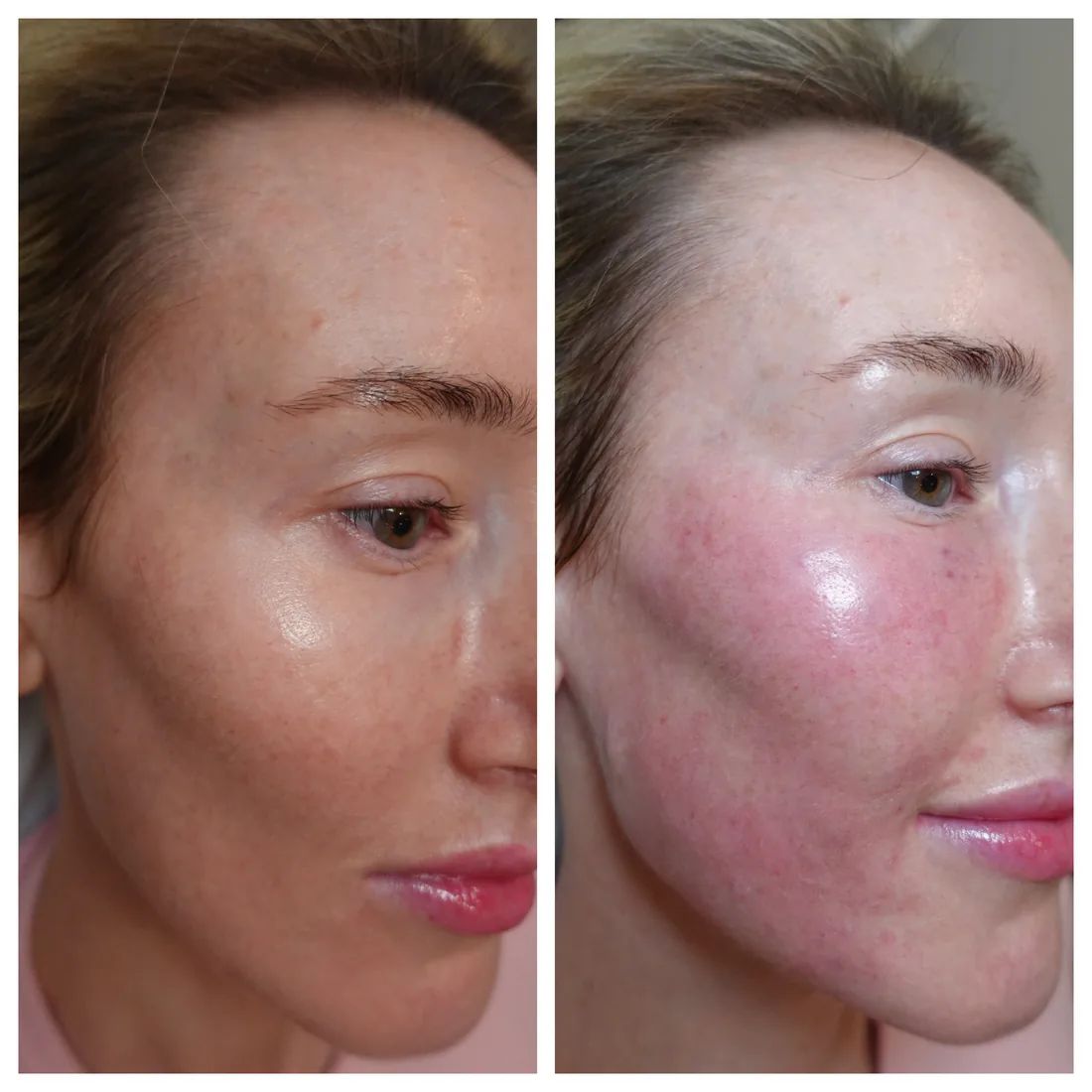
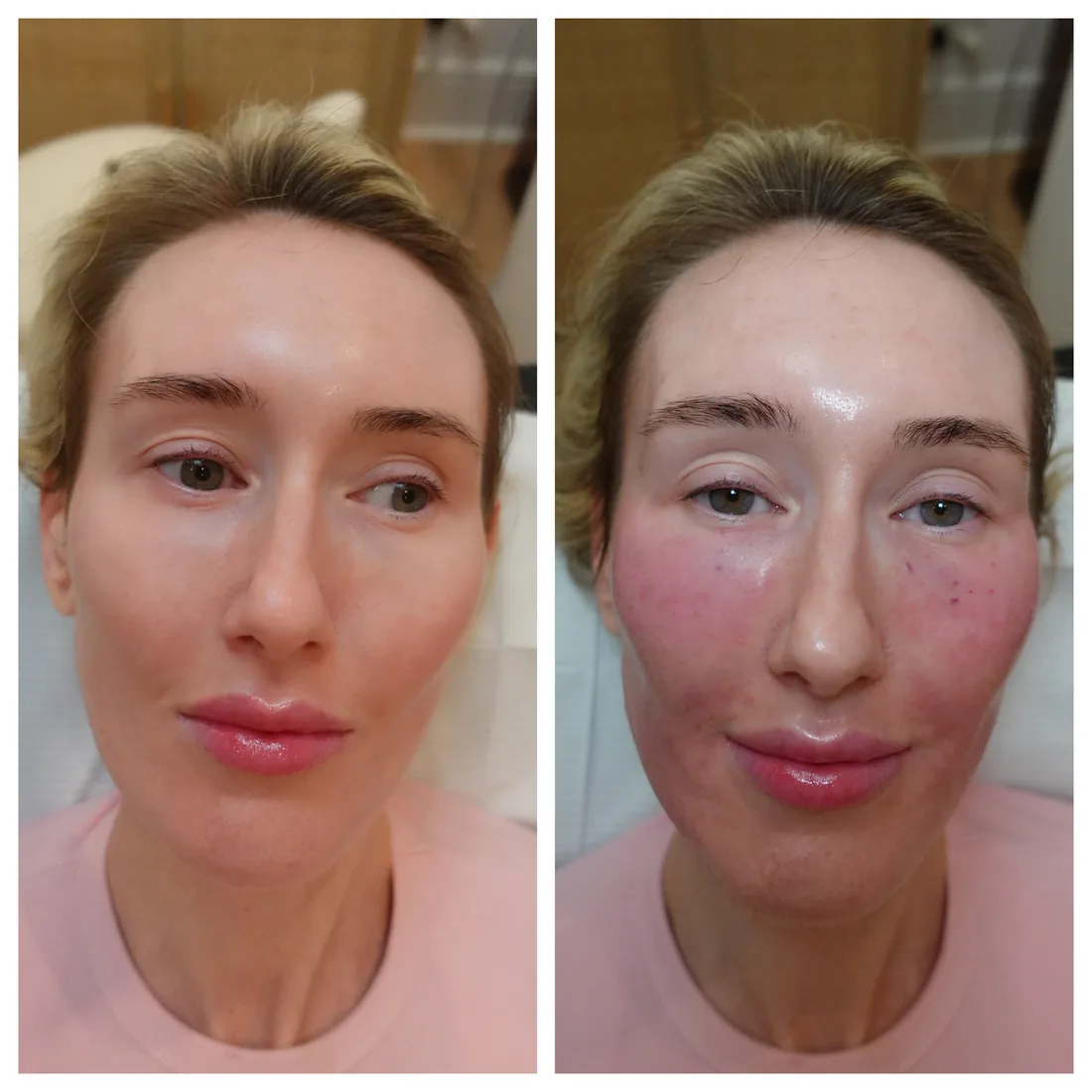
Individual results vary. Photographs are shared with client consent.
Frequently asked questions
Under-eye rejuvenation · Fulham SW6
Book a consultation in Fulham, London
My Skin Consultation is £50, redeemable against eligible treatments of £250 or more. I will assess your under eyes honestly and tell you whether tear trough filler, polynucleotides, or a combination would produce the best result for your specific concern.
South Park Studios, 88 Peterborough Road, Fulham SW6 3HH
Serving clients across Fulham, Chelsea, Wandsworth, Battersea, Clapham, Putney and South West London.
Recommended reading
Polynucleotides under eyes
Dark circles, crepiness and tear trough alternative.
ViewHow long do polynucleotides last?
Results duration by area and product.
ViewPolynucleotides cost UK
Real UK pricing and which product is best.
ViewExosomes vs Polynucleotides
How the two regenerative treatments compare.
ViewPolynucleotides Fulham
The full treatment page and what to expect.
ViewThis article is for informational and educational purposes only. It does not constitute medical advice. Always consult a qualified practitioner before starting any aesthetic treatment.